How Many Keywords
Should I Use for SEO?
- Home
- Blog
- Keyword Research
- How Many Keywords Should I Use for SEO?
How Many Keywords Should I Use for SEO?
Key takeaways
Effective keyword strategy is crucial for boosting your website's visibility and driving organic traffic. By diligently monitoring keyword performance and making data-driven adjustments, you can enhance your SEO efforts and achieve better results. However, navigating the complexities of SEO can be challenging. For expert guidance and a tailored approach to optimizing your keyword strategy, consider contacting SeoLogist.
table of content
SEO experts often feel a strong temptation to cram as many keywords as possible into their content. However, Google is unlikely to appreciate this "optimization," you could face severe penalties for keyword stuffing. Nevertheless, using relevant keywords is crucial to an effective SEO strategy. With it, achieving effective SEO becomes possible.
In addition to high-quality content and an optimized design, ranking for the right keywords helps your website stand out from the crowd and move closer to the top of search engine results pages (SERPs).
How many keywords should you use, what is the ideal keyword density? In this article, we'll answer all these questions and guide you through optimizing your SEO strategy effectively.
| Aspect | Fixed SEO Packages | Custom SEO Solutions |
|---|---|---|
| Starting Price | $1,000 CAD/month | $3,500 CAD/month |
| Services Included | Predefined set of basic services, such as:Predefined set of basic services, such as: - Basic keyword research - Standard content update - Basic on-page optimization - Basic backlink building | Tailored services based on business needs, including: - Advanced keyword strategy tailored to the niche - High-quality content targeting conversion goals - Technical SEO audits and fixes - Authority-building high-quality backlinks |
What is a Keyword?
A keyword is a specific word or phrase people enter into search engines for information, products, or services. Keywords for Search Engine Optimization are the terms you target to ensure your content ranks highly in search engine results pages (SERPs). They are crucial for connecting your website with the queries users are making.
Short-Tail Keywords
Short-Tail Keywords
Short-tail keywords are brief, usually consisting of one or two words. They are broad in scope and tend to have high search volumes. Example: "shoes," "digital marketing."
These highly competitive keywords can drive a lot of traffic, but they are less targeted and might attract visitors who are not specifically looking for what you offer.
Long-Tail Keywords
Long-tail keywords are longer, more specific phrases, usually comprising three or more words. They are narrower in focus and often have lower search volumes. Examples: "best running shoes for flat feet", "affordable digital marketing services for small businesses."
These keywords tend to have lower competition and attract more targeted traffic, which can result in higher conversion rates.
The Role of Keywords in Search Engine Algorithms
Search engines like Google use complex algorithms to analyze the content of web pages and match it with the search terms users enter. By strategically incorporating relevant keywords into your content, meta tags, and other on-page elements, you signal to search engines that your content is pertinent to specific queries. This, in turn, helps improve your site's visibility and SEO keyword ranking in search results.
How to Use Keywords for SEO?
The number of keywords per page can vary depending on several factors when using keywords for SEO. Generally, it is effective to focus on 1-2 primary keywords and 2-4 related secondary keywords per page.
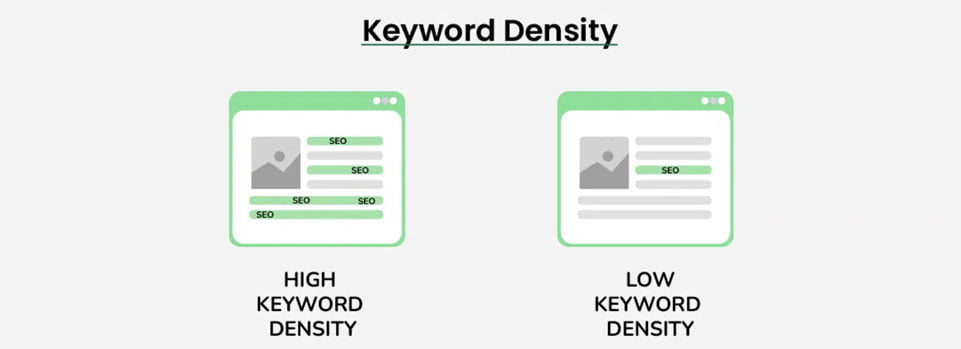
Research from Moz suggests that optimal keyword density should be around 1-2% of the total content, meaning that for a 1,000-word article, each keyword should appear approximately 10-20 times. Additionally, Google's guidelines emphasize the importance of using keywords naturally within high-quality, relevant content rather than overloading pages.
For example, HubSpot research indicates that pages with 5 or more relevant keywords tend to perform better in search rankings than those with fewer, provided the keywords are contextually appropriate and contribute to a coherent user experience. Balancing keyword usage with high-quality content and user intent is crucial for effective SEO.

Why is Keyword Frequency Important to your SEO strategy?
- Enhances Visibility:
Regular and strategic keyword use helps your content appear in search results when users search for those terms. It also increases the likelihood that your page will be discovered by users interested in the topics you cover. Increased visibility leads to higher organic traffic to your site. - Boosts Search Engine Ranking:
Search engines use keyword frequency to determine your page's ranking. A well-optimized frequency of relevant keywords can help your page rank higher for those terms. Improved rankings can result in more traffic and higher engagement rates. - Facilitates Content Structure:
Keywords help structure your content by guiding the creation of headings, subheadings, and key sections. This makes your content more organized and easier to navigate. Well-structured content enhances user experience and can lead to better engagement metrics. - Aligns with User Intent:
Frequent use of keywords matching user search queries aligns your content with what users seek. It helps in addressing their specific needs and questions. Meeting user intent can improve user satisfaction and reduce bounce rates. - Supports On-Page SEO Elements:
The content body uses keywords and on-page elements such as title tags, meta descriptions, and headers. Proper frequency in these elements helps with better indexing and ranking. Optimized on-page elements can enhance your content's performance in search results. - Avoids Keyword Stuffing:
While keyword frequency is important, overusing keywords can lead to keyword stuffing, negatively affecting readability and user experience. Finding a balance is crucial.
Proper keyword frequency ensures your content remains natural and engaging, avoiding penalties from search engines for over-optimization.
How to Check Keyword Density in Text?
To check keyword density in text, follow these steps:
- Select the Text:
Copy the portion of text you want to analyze, such as an article, blog post, or webpage content. - Count the Total Words:
Use a word processor or an online word counter tool to determine the total number of words in the text. - Identify Keywords:
Choose the keywords you want to analyze. Count how many times each keyword appears in the text. - Calculate Keyword Density:
Use the formula: (Number of Keyword Instances/Total Word Count)×100. For example, if a keyword appears 15 times in a 600-word text, the density is (15/600)×100 = 2.5 - Use Online Tools:
Alternatively, you can use online keyword density tools like Yoast SEO or SEOBook's Keyword Density Analyzer to automate the process. These tools provide detailed reports and recommendations.
Monitoring and Adjusting Keyword Strategy
To effectively monitor and adjust your keyword strategy, use analytics tools to SEO keyword tracking performance. Tools such as Google Analytics and Google Search Console provide valuable insights into your keywords' performance, including metrics like search traffic, click-through rates, and ranking positions.
By regularly reviewing this data, you can identify which keywords drive the most traffic and which are underperforming. Based on these insights, adapt your keyword strategy to improve results. This might involve refining your choice of keywords, optimizing content for higher-performing terms, or adjusting your approach to better meet user intent.
Continuous monitoring and data-driven adjustments ensure that your SEO efforts remain effective and aligned with your goals.
Get Clients to Your Business
with Our Effective SEO Strategy
Don't let your business fall behind in the online competition.
Contact us today to schedule an initial consultation.
Take Your SEO to the Next Level with SeoLogist
Effective keyword strategy is crucial for boosting your website's visibility and driving organic traffic. By diligently monitoring keyword performance and making data-driven adjustments, you can enhance your SEO efforts and achieve better results. However, navigating the complexities of SEO can be challenging. For expert guidance and a tailored approach to optimizing your keyword strategy, consider contacting SeoLogist. Our team of experienced professionals is ready to help you achieve your SEO goals and improve your online presence. Contact SeoLogist today to take the next step toward a more effective and successful SEO strategy.
Positive
- Improved Search Engine Rankings:
By targeting the right keywords, you can improve your website's visibility in search engine results, driving more organic traffic to your site. - Better Targeting:
Keyword research helps you understand what your audience is searching for, allowing you to create content that aligns with their needs and interests. - Informed Content Strategy:
With keyword insights, you can develop a content strategy that addresses topics your audience is interested in, leading to more engaging and relevant content.
Negatives
- Time-Consuming:
Keyword research can be a lengthy process, requiring significant time and effort to analyze and select the most effective keywords. - Overemphasis on SEO:
Focusing too much on keyword optimization can lead to content that is overly technical or less engaging to readers, potentially reducing user experience.
| On-Page SEO | Off-Page SEO | Technical SEO | Local SEO |
|---|---|---|---|
| Keyword Research | Link Building | Website Speed | Local Citations |
| Content Optimization | Social Media Signals | Site Structure | Google My Business |
| Meta Tags | Guest Blogging | XML Sitemap | NAP Consistency |
| URL Structure | Directory Submissions | Robots.txt | Local Reviews |
| Internal Linking | Influencer Outreach | Schema Markup | Geo-Targeting |
| User Experience | Brand Mentions | SSL Certificate | Location Pages |
| Image Optimization | Forums/Community Sites | Canonical Tags | Google Maps |
Keyword research is a fundamental aspect of search engine optimization (SEO) and digital marketing that involves identifying and analyzing the terms and phrases that potential customers use when searching for products, services, or information online. This process is crucial for optimizing a website’s content and structure to align with user intent, ultimately enhancing visibility and driving relevant traffic.
The core objective of keyword research is to understand and leverage the language your target audience uses in their search queries. By identifying the right keywords, businesses can create content that meets the needs of their audience, improving their chances of appearing in search engine results pages (SERPs) and attracting more qualified visitors.
Lorem ipsum dolor sit amet, consectetur adipisicing elit. Accusamus at beatae, culpa dignissimos doloribus dolorum enim exercitationem, facere fugit harum id incidunt odit placeat quidem quo quos rerum sapiente ullam?
Lorem ipsum dolor sit amet, consectetur adipisicing elit. Accusamus at beatae, culpa dignissimos doloribus dolorum enim exercitationem, facere fugit harum id incidunt odit placeat quidem quo quos rerum sapiente ullam?
Lorem ipsum dolor sit amet, consectetur adipisicing elit. Aspernatur blanditiis consequuntur cum ipsum laborum natus nostrum? Adipisci aliquam at ipsum laudantium omnis possimus, quis saepe soluta ullam unde ut, vel.
Lorem ipsum dolor sit amet, consectetur adipisicing elit. Aspernatur blanditiis consequuntur cum ipsum laborum natus nostrum? Adipisci aliquam at ipsum laudantium omnis possimus, quis saepe soluta ullam unde ut, vel.
Lorem ipsum dolor sit amet, consectetur adipisicing elit. Ab ad adipisci assumenda cupiditate doloribus ducimus iusto nemo nisi odit praesentium quibusdam quis repellat, reprehenderit similique sint temporibus ullam unde, ut!
Lorem ipsum dolor sit amet, consectetur adipisicing elit. Ab ad adipisci assumenda cupiditate doloribus ducimus iusto nemo nisi odit praesentium quibusdam quis repellat, reprehenderit similique sint temporibus ullam unde, ut!
Competitor Research
Understanding your competitors' strategies and identifying their strengths and weaknesses is essential for developing an effective SEO strategy. Our team conducts comprehensive competitor research to gain valuable insights and develop a competitive advantage.
KEYWORD Research
Identifying the right target keywords is crucial for driving targeted organic traffic to your website. Our keyword research process involves analyzing search intent, search volume, and competition to find the most relevant and high-value keywords for your business.
Technical SEO Audit
Technical SEO plays a significant role in how search engines crawl, index, and rank your website. Utilizing Google Search Console, we can identify and resolve indexing issues, ensuring that all your pages are properly indexed and tracking their performance in search results.
- Keyword Discovery:
Identification of up to 50 relevant keywords for your business. - Search Volume and Competition Analysis:
Basic analysis of search volume and keyword competition for the selected keywords. - Top Competitor Keywords:
A report on the primary keywords your top competitors are targeting. - Keyword List & Recommendations:
A detailed list of keywords with recommendations for content integration. - 1 Hour Consultation:
A one-hour consultation to discuss findings and next steps.
- Comprehensive Keyword Discovery:
Identification of up to 150 keywords relevant to your industry and target audience. - In-Depth Search Volume & Competition Analysis:
Detailed analysis of search volume, competition, and keyword difficulty. - Competitor Benchmarking:
In-depth analysis of competitors' keywords and strategies. - Long-Tail Keyword Suggestions:
Identification of long-tail keywords to target niche markets. - Keyword Research Report:
A comprehensive report with actionable insights and recommendations. - 2 Hours Consultation:
A two-hour consultation to review the report and strategize implementation.
- Extensive Keyword Research:
Identification of up to 300 high- value keywords tailored to multiple aspects of your business. - Advanced Search Volume & Competitive Analysis:
Thorough analysis including trends, keyword variations, and SERP features. - Competitor Deep Dive:
Detailed competitive landscape analysis, including keyword gaps and opportunities. - Content & SEO Strategy Recommendations:
Strategic recommendations for content creation, on-page SEO, and link-building based on keyword research. - Ongoing Support:
3 months of support including updates on keyword trends and strategy adjustments. - Keyword Research Report:
An extensive report with in- depth insights and strategic recommendations. - 3 Hours Consultation:
Three hours of consultation for in-depth discussion and strategy development.
Frequently Asked Questions
What are the 4 pillars of SEO?
The 4 pillars of SEO are technical SEO, on-page SEO, off-page SEO, and content optimization. These pillars cover optimizing website technical aspects, individual pages, link building, and creating high-quality content.
How does SEO keyword strategy help with content marketing?
An effective SEO keyword strategy helps create content that aligns with what your target audience is searching for, improving the chances of ranking well on search engine results pages and driving more organic traffic.
How many types of SEO strategies are there?
There are several types of SEO strategies, including local SEO, e-commerce SEO, content SEO, technical SEO, and link-building strategies, each tailored to specific goals and target audiences.
What should be included in a basic SEO strategy?
A basic SEO strategy should include keyword research, on-page optimization, technical SEO audit, content creation, link building, local SEO (if applicable), and monitoring and reporting.
What should be included in a basic SEO strategy?
Building a strong SEO strategy involves defining goals, conducting keyword research, analyzing competition, performing technical audits, optimizing on- page elements, developing a content strategy, implementing link-building tactics, leveraging local SEO (if applicable), monitoring and adjusting, and staying up-to-date with trends.

Related Articles



Comment