Answer Engine Optimization (AEO): Rank in AI Search (Guide)
- Home
- Knowledge Sharing
- Answer Engine Optimization (AEO): Rank in AI Search (Guide)
What is AEO
Answer Engine Optimization (AEO) is the practice of increasing the chance that AI-driven search experiences will select and cite your content when they generate answers (think: Google AI Overviews/AI Mode, Microsoft Copilot experiences, Perplexity).
What AEO is not:
- It’s not a replacement for SEO. Google explicitly states that SEO best practices remain relevant and there are no special optimizations required for AI features beyond strong SEO.
- It’s not “add schema and win.” Structured data can help machines understand pages, but Google also stresses it should match visible content, and it’s mainly used for eligibility in certain features—not as a guaranteed ticket into AI answers.
A practical way to think about AEO is a 3-stage ladder:
- Eligibility: Can the system crawl, index, and safely use your page?
- Selection: Does your page look like one of the best sources for the sub-questions the AI is expanding into?
- Citation: Is your content easy to extract, verify, and quote with minimal rewriting risk?
How AI search chooses sources
Google: AI Overviews / AI Mode + “query fan-out”
Google explains that AI features may use query fan-out—running multiple related searches across subtopics—to build a response and show a wider set of links than a classic single query might.
What that means for you:
- You don’t just need to rank for one head term. You need coverage that satisfies the cluster of sub-questions that fan out from it.
-
Pages that are well-structured and comprehensive tend to be easier “building blocks” for synthesis. (This is echoed across many AI Overview optimization guides.)
Bing + Copilot: crawl/index fundamentals, plus citations you can measure
Microsoft Support describes Bing’s core process as classic search: crawl (Bingbot) → build an index → rank.
And now Bing is unusually transparent about the AI layer: Bing Webmaster Tools’ AI Performance shows when your pages are cited in AI answers, which queries grounded those citations, and which URLs are referenced.
Perplexity: real-time web search + summary
Perplexity states that it searches the internet in real time and then distills what it finds into a response.
What that implies : your best AEO lever is to become a source that looks:
- accessible (not blocked, not paywalled in ways bots can’t access),
- credible (clear author/editorial signals),
- extractable (cleanly written answers).
The AEO framework
Eligibility (the “nothing else matters if…” layer)
Google’s AI features require that a page is indexed and eligible to show a snippet in Search; there are no extra technical requirements beyond Search eligibility.
So your baseline must include:
- crawlability and indexability (no accidental blocks, correct status codes, renderable content),
- solid internal linking so important pages are discoverable,
- good page experience.
Selection (why this page over the others?)
In AI search, “selection” often behaves like a superset of classic ranking:
- Authority signals still matter (quality, relevance, links),
- But AI systems often need specific passages that answer specific sub-questions.
That’s why many AIO-focused guides push:
- comprehensive coverage,
- clear topical structure,
- formatting that resembles snippet-friendly content (definitions, lists, tables).
Citation (the “make it easy to quote” layer)
Bing’s AI Performance announcement is unusually explicit: improve structure and clarity (headings, tables, FAQ sections) and support claims with evidence to build trust when content is reused in AI answers.
That’s your north star: reduce the model’s risk of misquoting you by making the “right extraction” the easiest extraction.
The AEO playbook: 8 steps to rank in AI answers
Step 1 — Choose “citation targets,” not just keywords
Start with queries that are likely to trigger AI answers:
-
“what is…”, “how to…”, “best way to…”, “compare X vs Y”, “cost of…”, “checklist for…”
Google notes these experiences are helpful for nuanced questions and comparisons.
Action : build a list of 30–100 prompts your buyers actually use (sales calls, support tickets, competitor comparison pages, forum questions).
Step 2 — Lock down technical eligibility (crawl, render, index)
Google recommends ensuring pages meet Search’s technical requirements and are accessible to Googlebot (HTTP 200, indexable content, not blocked).
Bing’s ecosystem also starts from crawling and indexing (Bingbot → index).
Minimum AEO tech checklist
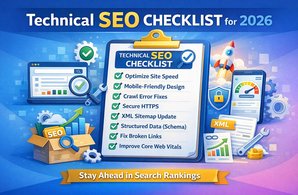
- Important pages return 200, are indexable, and are not blocked by robots rules.
- Canonicals are correct (no “citation hub” pages pointing canonical elsewhere).
- Main content is present in HTML (avoid hiding core answers behind heavy JS if it breaks rendering).
- Internal links point to your hub pages (Google specifically calls out internal linking as an SEO best practice for AI features).
Step 3 — Build “citation hubs” (topic clusters that match query fan-out)
Because AI systems may fan out into multiple subtopics, you want a pillar page that covers the concept and supporting pages that go deeper on each sub-question.
Action : For each citation target, define:
- 1 pillar page (“complete guide”)
- 5–12 supporting pages (how-to, comparisons, definitions, troubleshooting)
Step 4 — Write for extractability (BLUF + scannable structure)
This is where AEO starts to feel different in practice.
Patterns that repeatedly show up in AI Overview guidance:
- Put the answer immediately near the top of a section.
- Use short definitions, bullet lists, and tables (featured-snippet style).
AEO section blueprint (copy/paste structure)
- H2 : The question/concept
- 2–3 sentence direct answer (BLUF)
- Bullets : key points (3–7 bullets)
- Table or steps : when comparison/process is needed
- Evidence block: cite reputable sources or link to primary docs
- “What changes in real life”: examples for SMB context
Step 5 — Prove trust (make your claims citation-safe)
AEO fails when the AI can’t confidently cite you without risking error.
Bing’s guidance explicitly recommends:
- support claims with evidence,
- keep content fresh and accurate,
- reduce ambiguity across formats.
Trust signals to implement
- Clear author attribution + editorial policy (especially on “Your Money / Your Life” topics).
- Cite primary sources (standards bodies, platform docs, reputable research).
- Use dates (“Updated on…”) when topics change.
Step 6 — Use structured data for clarity (but don’t treat it like a ranking hack)
Google’s guidance: structured data is useful, but it must match visible content and follow guidelines.
Google also states there’s no special schema required for AI features.
Practical approach
- Implement schema where it genuinely reflects page content: Article, Organization, LocalBusiness, FAQPage (when you truly have FAQs), etc.
- Validate it and keep it aligned with visible text.
Step 7 — Freshness systems: updates + IndexNow (where it applies)
AI answers are only as good as what the systems can retrieve.
- IndexNow exists to notify participating engines when URLs change, reducing “days to weeks” discovery lag in some cases.
- Bing’s AI Performance post explicitly recommends IndexNow to help ensure AI systems reference the most current version.
- Bing’s IndexNow setup guide outlines key generation, hosting the key file, and URL submission.
Action : If you publish frequently (inventory, pricing, specs, locations), implement IndexNow (or ensure your CMS/plugin does). Then confirm Bing receives submissions.
Step 8 — Measure and iterate (use first-party reporting where available)
Google
:
Google states that sites appearing in AI features are included in Search Console’s overall Performance report under the “Web” search type.
Bing: Use AI Performance to track citations, grounding queries, and cited URLs over time.
A lightweight SMB AEO reporting cadence
- Weekly: export Bing AI Performance “grounding queries” → prioritize 10 queries to improve next.
- Biweekly: update 3–5 pages with the biggest “citation upside” (already indexed, close to being best).
- Monthly: review GSC trends for topic clusters (even if you can’t segment “AI Overviews” separately, you can track overall outcomes for the hub).
AEO templates you can use today
Template A — Citation-ready paragraph
Use this when you want AI systems to lift a clean definition.
Bottom line: [term] is [definition in 1 sentence] . It matters because [impact] . In practice, you should [3 action verbs] to achieve [result] . (Updated: Month YYYY)
Why it works: short, self-contained, low ambiguity, easy to quote.
Template B — Q&A block (PAA / AI answer-friendly)
Question: How do I know if my site shows in AI answers?
Answer (2–3 sentences): Start by checking first-party tools where available. Google includes AI-feature traffic in Search Console’s Performance report (“Web” search type). Bing provides an AI Performance dashboard showing citations, cited URLs, and grounding queries.
Template C — Comparison table stub (high-citation format)
| Option | Best for | Pros | Cons | What to choose if… |
|---|---|---|---|---|
| A | ||||
| B |
Tables are frequently easier for AI to summarize without distorting meaning (and they help humans scan fast).
Structured data & content controls (visibility vs protection)
Using preview controls (Google)
Google explicitly recommends using preview controls like nosnippet / data-nosnippet / max-snippet / noindex to manage visibility, and notes restrictive controls can limit how content is featured in AI experiences.
The robots meta tag documentation explains how page-level indexing/snippet controls work.
Rule of thumb:
- If your business model depends on keeping full text from being reused, use controls strategically.
- If your growth model depends on being cited, don’t accidentally “opt out” of extractability.
Bing’s note on respecting content controls
Bing’s AI Performance announcement notes that Bing respects content owner preferences expressed through robots.txt and supported control mechanisms.
Local business AEO (USA/Canada SMB reality)
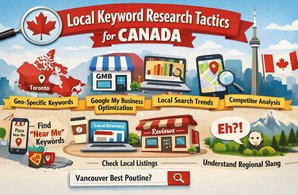
AI answers often show up for “near me” and “best in [city]” style prompts.
Bing explicitly calls out that accurate local business info matters, and points businesses to keep details current (including via Bing Places).
Local AEO checklist
- Keep NAP (name/address/phone), hours, categories consistent across your site + listings.
- Put a “business facts” block on location pages (hours, service area, booking link).
- Add FAQs for location-intent questions (parking, turnaround time, pricing ranges if you can source/justify).
- Use LocalBusiness schema where appropriate and accurate.
8) Common mistakes that kill AEO
- Treating schema as a shortcut. Google is clear: structured data must match visible content, and there’s no special schema needed to appear in AI features.
- Publishing commodity rewrites. Google’s AI-search guidance stresses unique, valuable, people-first content.
- Blocking bots by accident. Google highlights technical access as foundational for AI formats.
- No evidence. Bing explicitly recommends supporting claims with evidence for trust in AI reuse.
- Stale pages for time-sensitive topics. Bing recommends keeping content fresh and points to IndexNow.
Ignoring risk/trust. AI summaries can be inaccurate or abused; recent reporting highlights both misinformation concerns and scam exploitation in AI Overviews contexts.