SEO for Law Firms: A Practical Guide to More Qualified Legal Leads
- Home
- Knowledge Sharing
- SEO for Law Firms: A Practical Guide to More Qualified Legal Leads
Why Law Firm SEO Is Different From General SEO
Law firm SEO is more sensitive than SEO for many other industries because legal decisions are high-trust and often high-stakes. Someone comparing restaurants may tolerate vague copy. Someone comparing lawyers needs clarity, credentials, location, experience, fees where appropriate, and confidence that the information is accurate.
There are three major differences.
1. Legal searches often have an urgent intent
A search like “criminal defense lawyer near me,” “divorce lawyer in Toronto,” or “personal injury attorney Miami” usually signals a stronger commercial need than a broad educational query. These searchers may be ready to call, but only if the firm’s page quickly answers the right questions.
2. Legal content must be responsible
Google’s helpful content guidance encourages site owners to make it clear who created content and to use authorship information where readers would expect it. For law firms, that means anonymous, generic, or unreviewed legal content is a weak foundation.
3. Legal marketing has ethical constraints
In the United States, ABA Model Rule 7.1 says a lawyer must not make false or misleading communications about the lawyer or the lawyer’s services. ABA Rule 7.2 allows lawyers to communicate information about services through media, but includes restrictions around recommendations, referral compensation, and specialist claims. In Ontario, the Law Society of Ontario requires lawyers marketing legal services to identify that they are licensed as lawyers and sets conditions around advertised fees.
For SEO, this means your content should avoid exaggerated claims like “best lawyer,” “guaranteed results,” or “specialist” unless they are accurate, supported, and permitted in the relevant jurisdiction.
The Law Firm SEO Framework
A strong SEO strategy for a law firm should not begin with “write more blogs.” It should begin with a business question:
Which legal services, in which locations, for which types of clients, should organic search help us grow?
From there, build the SEO system around seven pillars.
| Pillar | What it answers | Example |
|---|---|---|
| Technical SEO | Can search engines access and understand the site? | Fix crawl errors, indexation issues, page speed, and broken links |
| Local SEO | Can nearby clients find the firm? | Google Business Profile, reviews, citations, location pages |
| Practice area SEO | Does each service have a strong page? | Divorce lawyer, estate litigation, business immigration |
| Content strategy | Does the site answer real legal questions? | “What happens after a DUI arrest?” |
| Trust signals | Why should a client believe the firm? | Attorney bios, credentials, reviews, case-type experience |
| Authority building | Do other trusted sites reference the firm? | Legal directories, local PR, bar publications |
| Measurement | Is SEO creating business value? | Calls, forms, booked consultations, signed cases |
The mistake many firms make is investing in one pillar while ignoring the others. A fast website with weak practice pages will struggle. Great content without local visibility may miss high-intent searches. A strong Google Business Profile with poor intake tracking may generate leads the firm never attributes correctly.
Local SEO for Law Firms
Local SEO is one of the most important parts of law firm SEO because legal clients usually need help in a specific jurisdiction or service area.
Google says local results are mainly based on relevance, distance, and prominence . Relevance is how well a Business Profile matches the search, distance reflects how far the business is from the searcher or searched location, and prominence reflects how well-known a business is.
For law firms, that translates into a practical checklist.
Google Business Profile basics
Your Google Business Profile should accurately include:
- Firm name.
- Primary category and relevant secondary categories.
- Office address or service area, depending on your setup.
- Phone number.
- Website URL.
- Business hours.
- Practice areas/services.
- Photos of the office and team were appropriate.
- Clear description of who the firm helps.
- Review the response process.
Do not stuff keywords into the business name unless they are part of the real-world business name. Do not create fake office locations. Do not use virtual location strategies without checking Google’s rules and your local professional obligations.
Local landing pages
A firm serving multiple cities or offices may need location-specific pages, but only if each page has a real purpose. A useful location page should include:
- The specific office or service area.
- Practice areas available in that location.
- Local court, jurisdiction, or process context where relevant and accurate.
- Attorney availability.
- Directions or parking details if clients visit the office.
- Local testimonials were ethically usable.
- FAQs specific to that city, state, or province.
Avoid creating 30 near-identical city pages that differ only in the city name. That creates thin content and a poor user experience.
Multi-location law firms
For firms with multiple offices, each location should have a clear relationship to the main website architecture:
- Main homepage.
- Main practice area pages.
- Location hub pages.
- Practice-area-by-location pages only where justified.
- Attorney bios are connected to the locations and practice areas they actually serve.
A Toronto family law page, a Vancouver immigration page, and a Miami personal injury page should not all use the same generic content. Each should reflect the legal service, local market, and jurisdiction.
Practice Area Pages and Site Architecture
For many law firms, the highest-value SEO pages are not blog posts. They are practice area pages.
A practice area page is the page that should rank when someone searches for a lawyer for a specific legal service. Examples:
- Personal injury lawyer.
- Car accident lawyer.
- Divorce lawyer.
- Child custody lawyer.
- Criminal defense lawyer.
- DUI lawyer.
- Immigration lawyer.
- Estate litigation lawyer.
- Employment lawyer.
- Business lawyer.
A weak law firm website often has a single page titled “Services” with a short paragraph for each area of law. That makes it difficult for search engines and users to understand which page is the best result for a specific query.
A better structure looks like this:
| Level | Page type | Example |
|---|---|---|
| 1 | Homepage | Smith & Co. Law Firm |
| 2 | Practice hub | Family Law |
| 3 | Specific service page | Divorce Lawyer |
| 4 | Supporting page | How property division works in divorce |
| 5 | Local page, where justified | Divorce Lawyer in Toronto |
What a strong practice area page should include
A strong law firm practice page should answer:
- What legal problem does this service solve?
- Who is this service for?
- What does the process usually involve?
- What jurisdiction does the information apply to?
- What should the client do next?
- Who at the firm handles this type of matter?
- What documents or information should the client prepare?
- What risks or deadlines might matter?
- How can the client contact the firm?
This page should not be stuffed with legal jargon. It should be accurate, clear, and written for a stressed human being who may not understand the legal process.
Content Strategy for Legal SEO
Legal content should be built around client intent, not just keyword volume.
A useful way to plan law firm content is to divide searches into three groups.
| Intent stage | Search behavior | Best content type |
|---|---|---|
| Informational | “What happens after a DUI arrest?” | Blog, FAQ, guide |
| Commercial | “best divorce lawyer near me” | Practice page, comparison-focused content, reviews |
| Transactional | “hire personal injury lawyer Toronto” | Practice area page, location page, contact page |
Competitor guides increasingly emphasize situation-specific questions and natural-language searches, rather than just short “lawyer near me” terms. That is especially important for AI-assisted search and featured-answer environments.
Good legal content topics
Strong topics usually come from real client questions:
- “How long do I have to file a personal injury claim?”
- “What should I do after being served divorce papers?”
- “Can I travel while my immigration application is pending?”
- “What happens at a bail hearing?”
- “How is child support calculated?”
- “What should I bring to a consultation with an employment lawyer?”
Each answer should clarify jurisdiction. A page about divorce law in Ontario should not imply that it applies across all Canadian provinces. A post about personal injury deadlines in Florida should not be written as if it applies nationwide.
What to avoid
Avoid:
- Publishing generic AI-written legal explainers without attorney review.
- Rewriting the same article for multiple cities.
- Making legal advice sound universal when laws vary.
- Publishing content without dates.
- Writing only for keywords and not for actual client concerns.
- Creating content that encourages a reader to take risky legal action without contacting qualified counsel.
A safe editorial workflow for law firms is:
- SEO team researches queries and SERP intent.
- An attorney or subject-matter expert provides legal direction.
- Writer drafts in plain English.
- Attorney reviews for legal accuracy.
- Editor checks clarity, structure, and compliance.
- SEO team adds internal links, metadata, schema, and tracking.
- Content is reviewed periodically for legal and procedural changes.
E-E-A-T, Ethics, and Trust Signals
For law firm SEO, trust is not a decorative element. It is central to conversion and content quality.
Google’s helpful content guidance recommends asking “Who, How, and Why” about content and encourages accurate authorship information where readers would expect it. A law firm should take that seriously.
Trust signals to include
Your website should make it easy to verify:
- Who the attorneys are.
- Where they are licensed.
- Which practice areas they handle.
- Which jurisdictions they serve.
- Whether content was written or reviewed by a lawyer.
- How recently important legal content was updated.
- How clients can contact the firm.
- What fees or consultation terms apply, where appropriate.
- What disclaimers apply to legal information.
Attorney bio pages
Attorney bios are often underused SEO assets. A strong attorney bio should include:
- Full name.
- Professional title.
- Jurisdictions/licensing.
- Practice areas.
- Education.
- Bar admissions.
- Representative experience, where allowed and carefully worded.
- Publications, speaking, memberships, or community involvement.
- Internal links to relevant practice pages.
- Clear contact CTA.
Ethics-safe SEO language
Avoid claims that cannot be substantiated. For example:
| Risky wording | Safer alternative |
|---|---|
| “The best injury lawyer in Toronto” | “Personal injury legal support for clients in Toronto” |
| “Guaranteed case results” | “We explain your options and help you understand the next steps” |
| “Certified specialist” | Use only if the lawyer is properly certified in that jurisdiction |
| “We win every case” | Avoid. Use accurate, compliant language |
| “No fee ever” | Be precise about contingency fees, disbursements, taxes, and exceptions |
Legal SEO should support trust, not create advertising risk.
Technical SEO Checklist for Law Firms
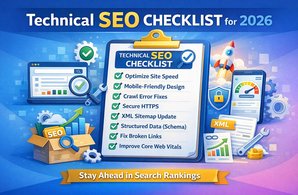
Technical SEO is the foundation that helps search engines access, render, index, and interpret your pages. Semrush’s law firm SEO guide highlights technical basics, including XML sitemaps, HTTPS, page speed, schema, broken internal links, and audits. Google’s own SEO Starter Guide also emphasizes making it easier for search engines to crawl, index, and understand content.
Priority technical checks
| Area | What to check | Why it matters |
|---|---|---|
| Indexation | Are important pages indexed? | A page cannot rank if it is not indexed |
| Crawl paths | Can crawlers reach practice pages through internal links? | Important pages need discoverable links |
| Sitemap | Does the XML sitemap include canonical, indexable pages? | Helps discovery and monitoring |
| Robots/meta robots | Are important pages blocked? | Prevent accidental deindexing |
| Canonicals | Are canonical tags self-referencing or correctly consolidated? | Prevents duplicate/conflicting signals |
| Mobile UX | Is the site usable on mobile? | Many legal searches happen on phones |
| Page speed | Are key pages fast enough? | Slow pages can hurt user experience |
| Broken links | Are internal links working? | Broken paths waste authority and frustrate users |
| Schema | Is structured data accurate and visible on-page? | Helps search engines understand entities |
| Forms/calls | Do forms and phone links work? | SEO traffic is wasted if conversion paths fail |
Schema markup for law firms
Useful schema types may include:
- Organization.
- LocalBusiness or LegalService, where appropriate.
- Person for attorney bios.
- BreadcrumbList.
- Article or BlogPosting.
- FAQPage when the FAQ is visible on the page.
Google’s structured data guidelines say structured data should represent the page content, should not mark up hidden content, should not mislead users, and should not guarantee rich result display. For FAQs specifically, Google currently says FAQ rich results are only available for well-known, authoritative government-focused or health-focused sites.
That does not mean law firms should avoid FAQs. It means they should use FAQ sections primarily to improve clarity, answer quality, internal linking, and machine understanding — not because FAQ stars or dropdowns are guaranteed in Google results.
Reviews, Reputation, and Legal Directories
Reviews matter because clients use them to reduce perceived risk before contacting a lawyer. FindLaw’s 2024 U.S. Consumer Legal Needs Survey reporting says that among respondents who contacted an attorney after learning about them online, 82% used online reviews, and nearly 40% said reviews were their primary source of information.
For SEO, reviews also build local trust and drive conversions. For intake, they influence whether a prospect calls your firm or a competitor.
Ethical review management
A law firm should:
- Ask satisfied clients for honest reviews.
- Make the review process easy.
- Avoid asking for only positive reviews.
- Avoid fake reviews.
- Avoid disclosing confidential client information in responses.
- Respond professionally to negative feedback.
- Monitor Google, legal directories, and major local platforms.
The FTC’s Consumer Reviews and Testimonials Rule went into effect on October 21, 2024 and addresses deceptive or unfair conduct involving consumer reviews and testimonials. For law firms, review integrity is not just a marketing issue; it is a trust and compliance issue.
Legal directories and citations
Relevant directories may include:
- Google Business Profile.
- Bing Places.
- Avvo.
- Justia.
- FindLaw.
- Lawyers.com / Martindale-Hubbell.
- Local bar associations.
- Canadian Bar Association or provincial legal directories where appropriate.
- Local business directories.
- Better Business Bureau, where relevant.
The goal is not to be listed everywhere. The goal is to be listed accurately on platforms that clients and search engines may use to verify your firm’s identity, location, and reputation.
Link Building for Law Firms
Backlinks still matter, but legal link building should be careful and reputation-led. A low-quality link campaign can create risk without building real authority.
Better link opportunities include:
- Local news commentary from attorneys.
- Bar association articles or resources.
- Legal education resources.
- Community sponsorship pages.
- University or nonprofit collaborations.
- Expert quotes in relevant publications.
- Original legal guides or research assets.
- Unlinked brand mention reclamation.
- High-quality legal directories.
Avoid:
- Paid link networks.
- Irrelevant guest posts.
- Mass directory submissions.
- Exact-match anchor spam.
- Private blog networks.
- AI-generated outreach at scale.
- Links from unrelated or low-quality sites.
The best law firm link building usually starts with actual authority: attorneys who can explain legal issues clearly, participate in local conversations, and contribute credible insight.
AI Search and Answer-Engine Visibility for Law Firms
AI-assisted search does not replace SEO fundamentals. It raises the standard for clarity.
If a search engine or AI answer system is trying to summarize a legal question, it is more likely to understand content that is:
- Clearly structured.
- Specific to a jurisdiction.
- Written in plain language.
- Reviewed by a credible professional.
- Supported by visible authorship and firm information.
- Internally linked to related topics.
- Consistent across the website and external profiles.
For law firms, answer-engine optimization should include:
- Short direct answers near the top of key sections.
- FAQ blocks based on real client questions.
- Attorney-reviewed explanations.
- Clear “this is general information, not legal advice” disclaimers.
- Practice-area pages with specific, not generic, headings.
- A schema that accurately reflects visible content.
- Strong entity consistency: firm name, attorneys, locations, services.
Do not treat AI SEO as a trick. Treat it as a reason to make your content more structured, more accurate, and more useful.
How to Measure Law Firm SEO Performance
Rankings are useful, but they are not the final goal. The final goal is qualified client acquisition.
Track performance at multiple levels:
| Metric | What it tells you |
|---|---|
| Organic impressions | Whether visibility is expanding |
| Organic clicks | Whether searchers are visiting |
| Keyword rankings | Whether priority terms are improving |
| GBP calls/clicks | Whether local search is generating action |
| Form submissions | Whether website visitors convert |
| Phone calls | Whether mobile/local users contact the firm |
| Booked consultations | Whether leads are qualified enough for intake |
| Signed cases | Whether SEO supports revenue |
| Practice-area ROI | Which legal services SEO should prioritize |
A practical reporting system should connect:
- Google Search Console for search visibility.
- GA4 for site behavior.
- Call tracking for phone leads.
- Form tracking for inquiries.
- CRM or intake software for lead quality.
- Manual notes from intake staff for case relevance.
For example, if organic traffic rises but signed cases do not, the problem may be keyword intent, page conversion, intake speed, wrong practice-area focus, or poor lead qualification. SEO reporting should help diagnose that, not simply show upward traffic charts.
Common SEO Mistakes Law Firms Make
1. One generic services page
A single “Legal Services” page rarely has enough depth to rank for competitive practice-area terms. Build dedicated pages for important services.
2. Thin city pages
Changing only the city name across dozens of pages is not a local SEO strategy. Location pages should contain useful local context.
3. Publishing unreviewed legal content
Legal content should be reviewed by a qualified person. Accuracy matters for both users and trust.
4. Ignoring Google Business Profile
For many law firms, GBP is one of the first things potential clients see. Incomplete profiles reduce trust.
5. Buying or faking reviews
This creates reputational, legal, and compliance risk. The FTC’s review rule specifically addresses deceptive review practices.
6. Measuring only rankings
A ranking report does not prove business impact. Track qualified leads and signed cases.
7. Overusing “best” and “guaranteed” claims
These can create ethical and credibility issues. ABA Model Rule 7.1 prohibits false or misleading lawyer communications.
8. Forgetting intake speed
SEO can generate demand, but slow response times can waste it. If calls go unanswered or forms sit in an inbox, rankings will not translate into revenue.
9. Treating SEO as a one-time project
Competitors, laws, search results, AI summaries, and user behavior change. SEO needs ongoing maintenance.
When to Hire a Law Firm SEO Agency
A law firm may be able to handle some SEO in-house if it has marketing capacity, attorney review time, and technical support. But an agency can help when:
- The firm competes in a crowded legal market.
- Rankings have stalled.
- The site has technical problems.
- Multiple locations or practice areas need structure.
- Content exists but does not generate leads.
- Reviews and directories are inconsistent.
- Paid search costs are rising.
- The firm cannot connect SEO to consultations and cases.
- The website is being redesigned or migrated.
- AI/search-answer visibility is becoming a concern.
A strong law firm SEO audit should usually review:
- Indexation and crawlability.
- Site architecture.
- Practice area pages.
- Local SEO and GBP.
- Competitor visibility.
- Content gaps.
- Internal linking.
- Backlink profile.
- Reviews and citations.
- Conversion tracking.
- Legal trust signals.
- Technical performance.
- Analytics and reporting setup.
A good agency should not promise guaranteed rankings or guaranteed case volume. It should explain the work, the risks, the assumptions, and the metrics used to evaluate progress.