What is E.E.A.T in SEO?
- Home
- Knowledge Sharing
- What is E.E.A.T in SEO?
Ranking for keywords on Google requires a website to produce content that answers user's search queries, a website that meets technical compliance, and an authority/building authority within its niche.
But how do organizations keep their keywords ranking high on Google search? That is where E.E.A.T signals come into play. What is E.E.A.T in SEO? This article defines what E.E.A.T is, the impact of generating E.E.A.T signals, and how missing E.E.A.T signals can lead to a decline in organic traffic & conversions.
Key Takeaways About E.E.A.T in SEO
- E.E.A.T stands for: Experience, Expertise, Authority, and Trust.
- Websites missing E.E.A.T signals are vulnerable to penalties from Google algorithm updates that can lower keyword rankings which can lead to a decline in traffic and leads.
- Generating E.E.A.T signals can maintain keyword rankings and stimulate longer site sessions & influence more users to convert as a sale or lead.
What Does E.E.A.T Mean?
E.E.A.T stands for experience, expertise, authority, and trustworthiness. Each element of E.E.A.T helps provide a comfortable and transparent UX for users on Google search.
Fundamentally, Google created this signal to push websites to be accountable for the quality of their products and/or services. As well as encouraging websites to provide more information about their specialties, and experience within their industry.
Below we break down each element of E.E.A.T and how a website can effectively generate each element:
Experience
The experience element of E.E.A.T oversees how long a business, organization, or individual has operated within an industry or industry niche. This element is crucial for users who are in the process of comparing brands/competitors for their purchasing decisions.
Providing information about how many years an entity has been operating in an industry or specialty on a website's homepage or about us page helps to generate the experience element. Seologist also recommends adding an external link to a 3rd party website that verifies data about an entity's experience (a LinkedIn profile will suffice).
Lastly, adding awards that an entity won/earned on a website helps to further stimulate this element of the E.E.A.T signal.
Expertise
The expertise element of E.E.A.T overviews what specialties a business, organization, or individual has within an industry. Sharing details of an entity's expertise is crucial for users who are making a purchasing decision for a product or service.
This can also help a website increase its qualified leads as users who are looking for a niche expert will be more satisfied vs partnering with a generalist.
Adding information about what areas of an industry your team is an expert in on the homepage of a website helps generate the expertise element of the E.E.A.T signal. This should further be expanded on service or product pages that are topical to your expertise.
Authority
The authority element of E.E.A.T explores how a business, organization, or individual reputation is perceived in comparison to competitors. Generating the authority element of the E.E.A.T signal requires a website to build backlinks from authoritative websites (Especially education sites, reputable news sites, and big-name brands).
Furthermore, building backlinks from websites that competitors have within their backlink portfolio helps to stimulate the authority element within the E.E.A.T signal.
Trust
The trust element of the E.E.A.T signal primarily focuses on user testimonials, and providing a business, organization, and/or an individual's credentials.
Adding examples of real customer testimonials to a website's homepage, or testimonials page helps to create a trust signal. However, adding an external link to the source of the testimonial (GBP, Yelp, Clutch, etc.) cements the trust signal generated on a website.
Adding credentials such as licenses and certificates while following up these credentials with an external link to a website or 3rd party that verifies credentials leveraged on a website further improves trust signal generation.
E.E.A.T Examples
Experience Example
Fulfilling the experience component of E.E.A.T is as simple as mentioning how long your business has been providing products or services. For instance, Legal Action provides the length of time their brand has provided legal series for directly on their homepage:

Expertise Example
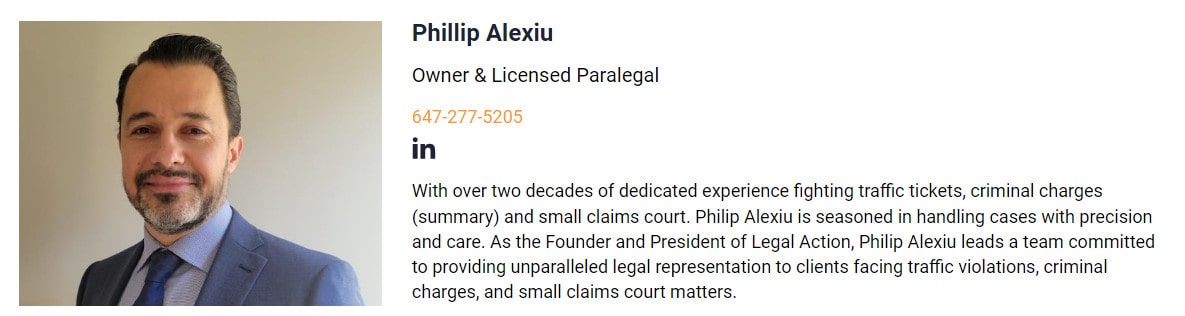
Creating author pages that mention a brand or individual specialties with a link to the author's LinkedIn that further explores their credentials is the easiest way to comply with the expertise component of E.E.A.T
Adding expertise information helps users in their buyer's journey for those looking for someone with a specialty in a niche.
Authority Example
Building backlinks toward a website from other sites that have a high link equity/domain rating is the primary way to optimize for the authority component of E.E.A.T. Furthermore, publishing awards/accolades that a brand has won on their homepage is another way to reinforce the authority signal on Google search.

Trust Example
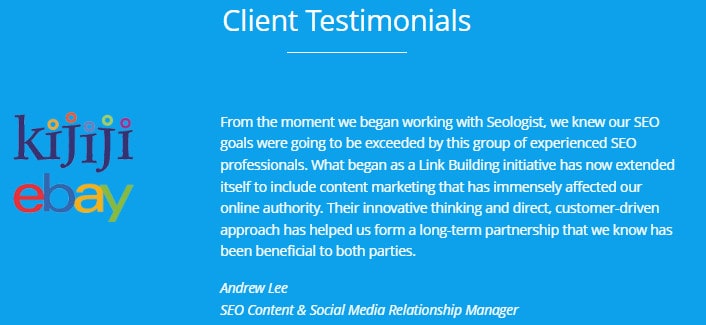
Mentioning user reviews/testimonials on a website is the fastest way to generate trust signals on a website. To make things easier for Google to crawl and verify the authenticity of the reviews leveraged on a site. Provide an external link to the source of where the review was aggregated from:
Why Businesses Must Generate E.E.A.T Signals
E.E.A.T Can Influence Position Rankings to Increase
Although a strong content structure and strategy are the primary catalysts for achieving 1st-page rankings on Google.
Missing E.E.A.T Signals Can Damage Revenue
Google has tweaked its algorithm to make E.E.A.T signals critically important for any business owner looking to acquire online sales & leads.
If a website is missing E.E.A.T signals from their site. There is a strong likelihood that an algorithm update that focuses on trust signal generation will penalize your website. An algorithm penalty can cause major position rankings to decrease.
This can cause a serious decline in organic traffic, sales, and qualified leads.
Missing E.E.A.T Signals Can Damage Brand Awareness
E.E.A.T signals are designed to add transparency to a website regarding a business, organization, or individual's ability to provide a quality product or service. Failing to provide users with information about your experience & expertise in a business vertical or industry.
Missing E.E.A.T Signals Can Lower Brand Reputation
Competition for keyword market share across nearly every business vertical and industry is overflowing with different brands, freelancers, etc. Generating E.E.A.T signals brings a natural polish to a website's actionable information that users look at when determining their purchasing decisions.
Missing E.E.A.T signals will lower your brand reputation and harm the chances of a brand being considered for a purchasing decision if competitors mention their experience, expertise, and reveal their accolades, credentials, and licenses. It effectively puts competitors on a pedestal for success because competition will be more transparent about themselves & their abilities to produce a high-quality product or service vs a website that is missing E.E.A.T signals.
E.E.A.T in SEO FAQs
How do I measure whether my E.E.A.T improvements are working?
Track proxy metrics that reflect credibility: branded search growth, referral traffic from authoritative domains, and increases in “About/Author/Reviews” page views. In Search Console, watch CTR changes on pages where you tightened titles/snippets to emphasize credentials. Pair this with quality signals in analytics (time on page, scroll depth) for content that now includes firsthand experience and citations.
What belongs on an author bio to support E.E.A.T?
Include full name, job title, years in the field, notable certifications, and a concise statement of hands-on experience. Link to third-party profiles (LinkedIn, professional associations, journal bylines) and past talks or media features. Add a dated “reviewed by” note if a subject-matter expert medically/legally reviewed the piece.
How can small or new brands demonstrate Authority without big-name backlinks?
Start with niche authority: guest posts on respected industry blogs, local chambers/associations, and curated resource lists. Publish unique primary data (surveys, case studies, field tests) that others can cite. Sponsor or speak at meetups and document it these off-site mentions compound into a credible footprint.
What on-page elements most reliably boost Trust?
Clear ownership (legal entity, physical address), transparent pricing/policies, and visible customer support options reduce friction. Prominently display review counts, methodology notes, return/warranty terms, and last-updated timestamps. Add security markers where relevant (HTTPS, payment logos) and accessibility statements to signal user care.
How should I cite sources to reinforce Expertise?
Favor primary sources (standards, peer-reviewed studies, official documentation) and link directly to the exact section cited. Briefly summarize why the source is authoritative and how it informs your recommendation. Keep a references section and avoid circular citations (blog quoting another blog) for critical claims.
What governance practices strengthen E.E.A.T over time?
Create an editorial policy that defines fact-checking, reviewer roles, and update cadences by topic risk (e.g., YMYL quarterly). Maintain a change log on key pages to show material revisions. Run periodic content audits to prune outdated, thin, or overlapping pages that dilute topical authority.
How does user-generated content (UGC) affect E.E.A.T?
UGC can enhance real-world experience, but only if moderated. Establish clear guidelines, filter spam/claims that need evidence, and label opinions vs. facts. Elevate high-quality UGC (with permission) and add expert responses where health/finance advice appears to keep trust intact.
What role do structured data and technical hygiene play?
Use schema types like Person, Organization, Article, Review, and LocalBusiness to make credentials, ratings, and identities machine-readable. Ensure consistent NAP, publisher, and author identities across your site and knowledge profiles. Technical stability (fast load, mobile friendliness, no intrusive interstitials) reduces doubt and supports trust.
How should I adapt E.E.A.T for AI-assisted content creation?
Disclose AI assistance when used and ensure every piece undergoes human fact-checking and style review. Prioritize firsthand insight — photos, logs, test results, and screenshots — to anchor content in real experience. Attribute quotes and data properly to avoid synthetic “hallucinations” eroding credibility.
What’s the fastest way to recover if an update hurts pages lacking E.E.A.T cues?
Triage high-impact pages: add author credentials, source citations, and clearer recommendations with pros/cons and risks. Consolidate duplicative content, improve “who we are” signals sitewide, and seek a handful of relevant, high-quality mentions/links. Re-crawl key pages via sitemaps and monitor query-level CTR/rank movement to validate progress.