Semrush vs Moz: A Detailed 2026 SEO Tool Comparison for Professional Teams
- Home
- Knowledge Sharing
- Semrush vs Moz: A Detailed 2026 SEO Tool Comparison for Professional Teams
Choosing an SEO platform in 2026 isn’t about “which tool is famous.” It’s about data depth, workflow speed, reporting reliability, and how well the tool matches your SEO maturity — from SMB teams doing fundamentals to agencies managing dozens of clients.
Two long-standing platforms dominate this comparison: Semrush and Moz Pro. Most guides summarize this as “Semrush is bigger, Moz is simpler.” That’s directionally true — but not specific enough to make a confident purchase decision. This long-read breaks down what each tool is designed to do, where the real gaps are, and how to choose without overpaying or under-tooling.
What Semrush and Moz are designed for
Semrush: a marketing platform anchored in SEO
Semrush positions itself as a broader marketing platform: SEO is central, but many workflows extend into content, competitive intelligence, and (depending on subscriptions) adjacent toolkits.
In practice, that shows up as:
- a strong emphasis on competitor intelligence (domain comparisons, gaps, market view)
- large reporting limits that scale with plan tiers
- deeper technical crawling configuration and reporting detail (especially relevant for agencies and larger sites)
Moz Pro: classic SEO fundamentals, simplified
Moz Pro is more focused: keyword research, link research, rank tracking, and site crawling — wrapped in a UI that’s often easier for smaller teams to adopt.
Moz is also strongly associated with its link metrics ecosystem (especially Domain Authority, “Spam Score,” and Link Explorer workflows), which many teams still use for benchmarking and link evaluation.
Bottom line : Semrush tends to win when SEO is run as a growth system across multiple sites/clients. Moz tends to win when you want a focused SEO toolkit with lower operational complexity.
Feature-by-feature quick comparison (what matters in real work)
Note : “Database size” claims can vary by snapshot and vendor marketing. Treat them as directional, then validate by testing your niche/regions (Canada + US) with a shortlist of keywords and competitors.
| Category | Semrush (SEO Toolkit focus) | Moz Pro |
|---|---|---|
| Keyword research | Strong depth + larger suggestion limits (plan-dependent) | Strong fundamentals, but suggestion visibility can be capped (commonly cited at 1,000) |
| Competitor analysis | Traffic estimates + intent views + broader competitive views | Competitor traffic stats typically rely on GA access; less useful for competitor-only research |
| Technical SEO audits | 140+ checks + CWV coverage + JS reporting; page limits per plan | Crawl/audit capabilities, generally positioned as simpler; crawl limits can be generous on lower tiers (per reviewer comparisons) |
| Rank tracking | Included in SEO Toolkit; plan limits vary (e.g., 500/1,500/5,000 tracked keywords by tier in Semrush materials) | Plan-based tracking; third-party summaries cite specific caps by plan |
| Links & metrics | Authority Score + backlink workflows; add-on tools (audit, outreach) depending on setup | DA + Spam Score ecosystem; Link Explorer positioning is a core strength |
| Reporting | Plan-based report limits, PDF scheduling, integrations (varies) | Built-in reporting; plan limits listed by aggregators |
| Pricing reality | Published monthly pricing for SEO Toolkit tiers + separate user seat pricing | Multiple tiers with published caps; pricing snapshots vary by source date |
Keyword research: depth vs decision speed
Keyword research isn’t just “how many keywords exist in the database.” For SEO teams, the real questions are:
- Can we quickly generate enough relevant variants for a topic cluster?
- Can we filter by intent, SERP features, and realistic difficulty?
- Can we export enough rows to support content planning at scale?
Semrush: scaled discovery and larger suggestion limits
Reviewer comparisons emphasize that Semrush provides more keyword data and higher reporting/suggestion limits, which are particularly useful for larger content programs.
Semrush’s published plan limits also show scaling in the number of results you can retrieve per report (e.g., 10,000 → 30,000 → 50,000 across tiers in the SEO Toolkit pricing/limits documentation).
When this matters most (Canada + US teams) :
- multi-location service businesses (province/state + city pages)
- eCommerce category expansion (facets, attributes, “near me,” brand + product modifiers)
- SaaS content ops where you build clusters and need large exports for briefs and internal linking maps
Moz: prioritization-first, but watch suggestion caps
Moz keyword workflows are often praised for being approachable and decision-friendly. However, multiple comparisons indicate that the number of visible suggestions can be capped (Style Factory cites 1,000 suggestions regardless of plan).
If your workflow is “ small set of keywords → track → optimize → report ,” this is rarely a problem. But if you’re building thousands of pages, caps become a source of operational friction.
Best fit :
- SMB sites where a focused keyword set is enough
- in-house teams that need a clean process more than massive exports
Competitor & market analysis: the biggest separation
This is where Semrush typically differs most clearly from Moz.
Semrush: competitor intelligence baked into the workflow
In many comparisons, Semrush is positioned as stronger for competitor analysis—especially because it provides competitor traffic estimates and broader domain/market views.
Style Factory also cautions that traffic estimates aren’t always perfectly accurate (especially for smaller sites) and should be used to identify trends rather than treated as ground truth.
Why this matters for CMOs : competitor research shifts your planning from “ what do we think will work ” to “ what already works in this category ,” accelerating budget and content prioritization.
Moz: competitor traffic analysis is limited without GA access
Style Factory explicitly notes that Moz typically doesn’t provide competitor traffic estimates as Semrush does; the practical workaround is to integrate with GA (which only helps if you have access to the property).
So Moz is less suited for cold competitor recon (especially in new markets or for agencies pitching new accounts).
Technical SEO: audits, CWV, JS, and crawl limits
Most “Semrush vs Moz” articles say “ both have site audits ,” but the meaningful comparison is:
- number and type of checks
- depth of crawl configuration
- CWV visibility
- JavaScript rendering insights
- page limits per audit and per month
Semrush Site Audit: broad coverage + explicit limits
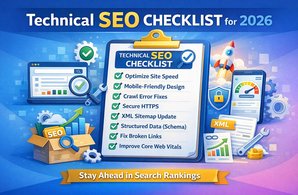
Semrush’s documentation describes Site Audit as having 140+ checks and covering technical issues including HTTPS, duplicate content, broken links, hreflang, and also reporting areas tied to CWV and JS impact.
Page limits are also clearly documented: for example, Pro tiers can crawl up to 100,000 pages/month and 20,000 pages per audit; higher tiers increase monthly crawl limits and per-audit caps (e.g., Business up to 1M pages/month and 100,000 pages per audit).
This transparency helps teams forecast whether the tool will cover:
- a 10k–200k URL eCommerce site
- large blog networks
- client portfolios
Moz crawling: often described as simpler (and sometimes generous on lower tiers)
Some reviewer comparisons claim Moz can offer generous crawl limits on lower-tier plans and keep the UI easier to interpret.
However, for deeply technical teams (JS rendering nuances, CWV diagnostics at scale), you’ll want to test your exact site type and verify the depth of reporting you need.
Links & authority metrics: how to compare without “metric worship”
Link analysis comparisons often derail into “DA vs Authority Score” arguments. A better approach is:
- Use authority metrics as benchmarks, not KPIs
-
Evaluate link tools based on whether they support your operational workflow:
- prospecting
- qualification
- cleanup/audit
- reporting
Moz: DA and Spam Score are widely used for evaluation
Moz’s ecosystem is strongly associated with Domain Authority and Spam Score-style risk signals used in link vetting. Moz’s Spam Score is described as the percentage of sites with similar features that have been penalized or banned (per Moz's educational content).
This doesn’t mean “Spam Score is truth,” but it’s useful as a triage layer when reviewing large link sets.
Semrush: authority scoring + backlink auditing workflows
Semrush comparisons highlight link building and backlink analysis as a strength (including auditing workflows and filters).
Important nuance: vendors may report different “index size” values. Even when a tool claims a very large backlink index, what matters is whether it finds the links that matter for your competitors in your market (Canada + US) and whether those links update with enough freshness for your cadence.
Rank tracking & reporting: what professional teams should check
Most teams don’t fail because a tool “can’t track rankings.” They fail because:
- Tracking caps are too low
- Segmentation is painful (device, location, intent groups)
- reporting is too manual
- Stakeholder dashboards are inconsistent
Semrush: plan-based tracking caps, plus multi-targeting features on higher tiers
Semrush’s published SEO Toolkit limits show clear caps on tracked keywords by plan tier (e.g., 500 / 1,500 / 5,000).
If you manage multiple locations or need segmentation, ensure the plan you’re buying supports the structure you need (not just the raw keyword number).
Moz: clean reporting experience, but compare caps and seats
Moz plan summaries list keyword tracking caps, and seats by plan (as captured in pricing aggregators).
For in-house teams, Moz reports are easier to share without extensive training. For agencies, you’ll still want to validate how reporting scales across clients.
Pricing reality: the “true cost” checklist (this is where teams get burned)
A common mistake: comparing “$X/month” and stopping there.
Semrush (SEO Toolkit): plan prices + published limits + seat costs
Semrush publishes pricing and limits for the SEO Toolkit plan (Pro / Guru / Business), as well as the scaling of results per report, crawl pages, and tracked keywords.
Semrush also documents additional user pricing tiers (seat add-ons), which can materially affect your cost if your workflow requires multiple logins across SEO, content, and leadership.
Moz Pro: tiers and limits (verify snapshot date)
Moz plan pricing and limits are available via pricing aggregators (G2 lists tiers and caps, and also notes the last update date). Use this for budgeting, but always confirm current pricing before purchase.
A 15-minute decision framework (built for CMOs + SMB owners + SEO specialists)
Step 1 — Define your operating mode
Pick the closest:
- Solo / SMB fundamentals: 1 site, <300 tracked keywords, basic audits, simple link vetting
- In-house growth: multiple initiatives, content clusters, recurring reporting
- Agency / multi-client: repeatable competitor research, scalable exports, seats, client reporting
- Enterprise / large eCom: crawling at scale, segmentation, integrations, governance
Step 2 — Score your “must-have” workflows (0–2)
Give each a score:
- Competitor recon without GA access (0/1/2)
- Large keyword discovery + exports (0/1/2)
- Technical audit depth (CWV/JS, page limits) (0/1/2)
- Link vetting + auditing (0/1/2)
- Reporting automation + stakeholder clarity (0/1/2)
- Seat scalability (0/1/2)
If competitor recon, exports, and technical depth are critical, Semrush usually wins on operational capability and limits.
If clarity, onboarding speed, and SEO fundamentals are your bottleneck, Moz can be the better “do the basics well” choice, especially if you don’t need heavy competitive intelligence.
Step 3 — Run a 3-test pilot (the only way to be sure)
Do this before committing annually:
- Select 10 competitors in Canada and the US, and compare how each tool surfaces their top pages and keyword themes.
- Pick 50 core keywords and test suggestion depth + export practicality (how fast you can build a content plan).
- Crawl a representative section of your site and validate the actionability of audit outputs (CWV/JS signals and limits).
Common mistakes (and how to avoid them)
- Buying on “brand” instead of workflows. Start with use cases, not feature lists.
- Ignoring limits. The tool may “have” a feature, but you can’t use it at scale with your plan’s caps.
- Comparing only the base price. Seats and add-ons change the monthly reality.
- Treating traffic estimates as truth. Use them directionally and validate with first-party analytics where possible.
Over-indexing on a single metric (DA/Authority). Use it for benchmarking, then evaluate links in context.
FAQ
Is Semrush “better” than Moz?
“Better” depends on your workflows. Many comparisons call Semrush the stronger all-round platform, while Moz is praised for simplicity and fundamentals.
Does Moz provide competitor traffic estimates?
Common comparisons state Moz doesn’t provide competitor traffic estimates in the same way Semrush does; GA integration helps only if you have access to the property.
How should we compare keyword tools fairly?
Compare suggestion limits, exportability, intent labels, and the speed of building a usable topic map — database size alone isn’t enough.
Do both tools include site audits?
Semrush documents Site Audit coverage and limits clearly (checks, CWV/JS angles, page caps by tier). Validate Moz crawl depth with your own test set.
Is Domain Authority a Google ranking factor?
Moz’s DA is a third-party metric used for prediction/benchmarking; it’s best treated as a comparative indicator rather than a direct ranking factor. (Industry education sources consistently frame it this way.)
What should SMBs in Canada/US pick?
If you’re doing fundamentals and want clarity, Moz can be enough. If you rely on competitor recon, aggressive content scaling, or agency-style reporting, Semrush is usually the safer operational bet.