International SEO: What to Keep in Mind
- Home
- Knowledge Sharing
- International SEO: What to Keep in Mind
What is International SEO?
When you've already achieved remarkable results with local SEO and your product or service shows potential demand beyond your country's borders, international SEO comes into play.
An international SEO strategy is a set of actions aimed at increasing your website's visibility on search engine results pages (SERPs) for different languages and countries.
The goal of this strategy is to adapt your website so that it resonates with a global audience.
How to Prepare Your Business for the Transition from Local to International SEO
To make a mark on the international market, careful preparation of a global SEO plan is essential. Let's break down what needs to be done first, point by point.
International SEO Checklist
- Conduct Research to Identify Target Regions and Languages.
- Adapt Keyword Research to Include International Search Queries.
- Create Content for Other Languages.
- Update Website Structure and Navigation for a Multilingual and Multinational Audience.
- Implement Hreflang Tags.
Step-by-step planning is crucial to a successful transition. Since countless companies compete globally and the difficulty of achieving high rankings for relevant keywords continues to increase, a comprehensive strategy becomes necessary.
Defining Target Regions
To successfully implement an international SEO strategy, thorough research is essential to determine target regions and languages. These studies involve analyzing data on search queries, potential audiences in different countries and languages, and the competitive landscape.
Studying competitors can simplify your path. If you offer a similar product, you can identify which countries their website is optimized for, and incorporate their targeting into your strategy.
It is essential to consider each market's cultural nuances, user preferences, and competitive environment. Based on the gathered data, you can formulate a strategy optimally tailored to the requirements and needs of the international audience, effectively attracting traffic and enhancing brand visibility in various regions of the world.
Adapting Keyword Research
When adapting keywords for global SEO, conducting keyword research for specific regions is crucial. This involves not only translating keywords into local languages but also considering local terminology and user preferences.
For example, terms and phrases commonly used in one country may be completely unfamiliar or have different meanings in other regions. Therefore, it's important to pay attention to the terminological peculiarities of each region when selecting keywords.
This not only helps attract target audiences from different parts of the world but also ensures higher conversion rates since users will find what they're looking for using familiar terms and phrases.
Creating Content for Other Languages
When creating content in other languages, it's crucial to not just translate the text, but also adapt it to a specific region. This means considering the style, mentality, and overall atmosphere of that region.
For example, what sounds interesting or appropriate in one country may be entirely irrelevant or even offensive in another.
Therefore, it's essential to study the cultural nuances of the audience and understand which themes and approaches will be most effective for that region. Incorporating local expressions, patterns, and atmosphere can make the content more appealing and understandable to the audience, and even increase its success.
Update Website Structure and Navigation
Updating the structure and navigation of a website for a multilingual and multinational audience requires careful consideration.
Firstly, it's essential to create a clear and intuitive structure that accommodates different languages and regions. This may involve creating separate sections or pages for each language or region, and using language and geographic region switches for user convenience.
Moreover, it is crucial to ensure ease of navigation on the website for all users, regardless of their language preferences or location. This includes using language and geographic filters in the menu, clear links and labels on pages, and breadcrumbs for easy navigation between website sections.
For successful website structure and navigation updates, it's also important to test and optimize it for different languages and regions. This will ensure that users can easily find the information they need and interact with the website regardless of language or location.
Without the Hreflang Tag, Your Website is Not Multilingual
Without Hreflang tags , your multilingual content may encounter significant SEO issues. These tags are crucial tools for indicating to search engines the various language versions of your content, ensuring proper indexing and display of pages in search results for relevant audiences.
Failure to add Hreflang tags can lead to search engines misinterpreting your multilingual content, resulting in content duplication, low page rankings, and incorrect search result displays for users from different countries and language groups. Therefore, including Hreflang tags is vital for optimizing multilingual content and ensuring its successful promotion in search engines.
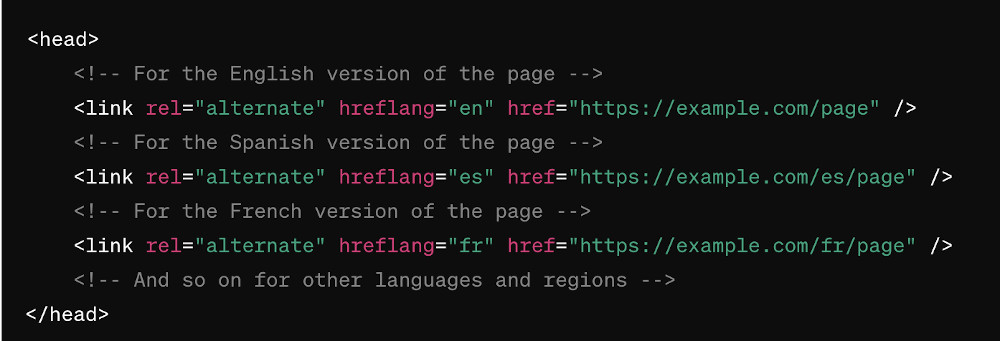
Here's an example of how you can add Hreflang tags to pages on your website:
HTML Page Code .
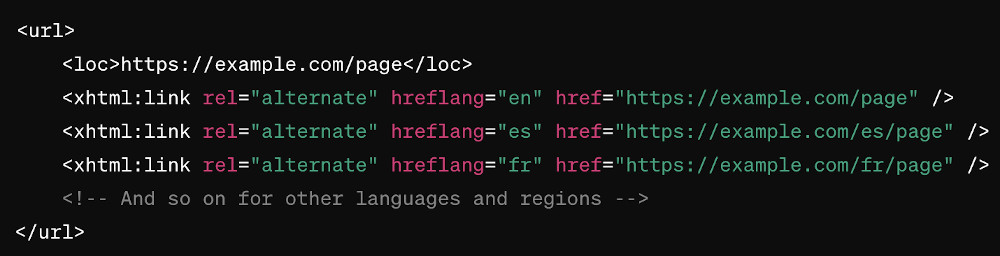
XML Sitemap.
If you have an XML sitemap, you can also add Hreflang tags directly to the XML markup.
WordPress.
If your website runs on WordPress, there are plugins available that automatically add Hreflang tags. Some popular plugins include Yoast SEO , WPML , and Polylang .
Additional Recommendations:
- Make sure each version of the page contains links to all other versions of that page.
- Double-check the accuracy of URLs and language codes.
- After adding Hreflang tags, it's recommended to test them using webmaster tools to ensure they are functioning correctly.
International SEO best practices
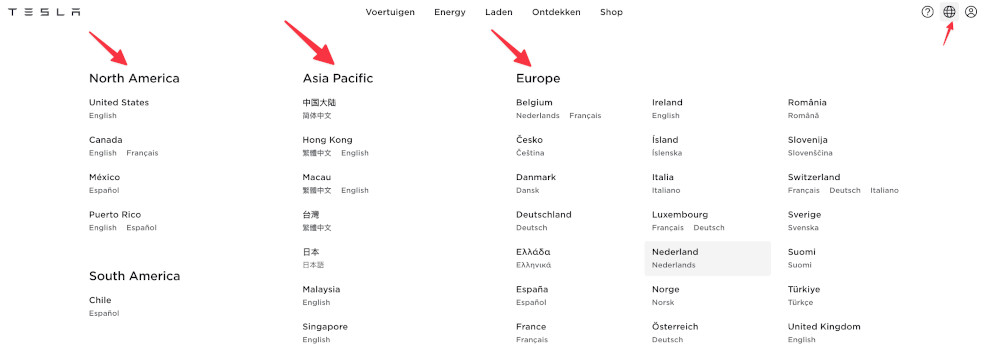
Now that we have reviewed the components that make an effective international SEO campaign. Let's examine Tesla's website and outline examples of international SEO in action:
URL Structure
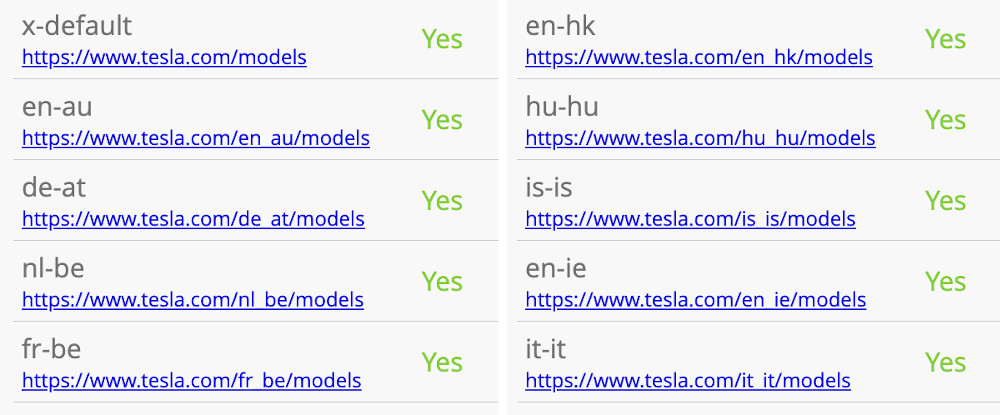
The Tesla website has various localized versions for different countries and regions. For example:
Hreflang Tags
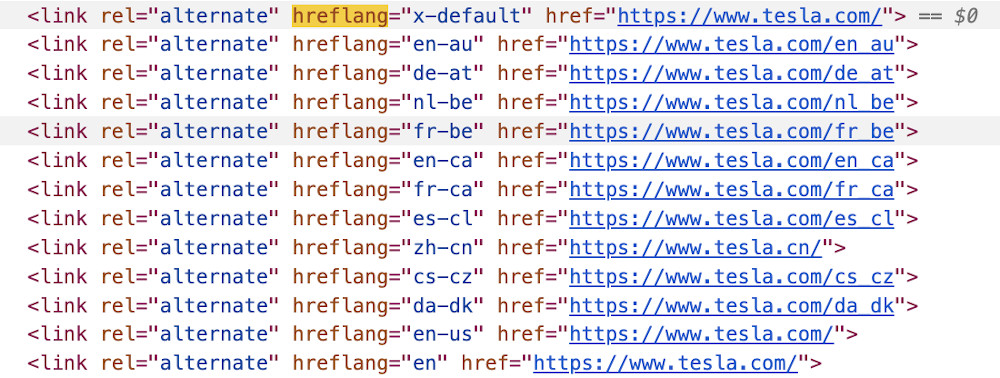
Each page on the Tesla website contains appropriate Hreflang tags, indicating other language versions of that page. For example:
Localized Content
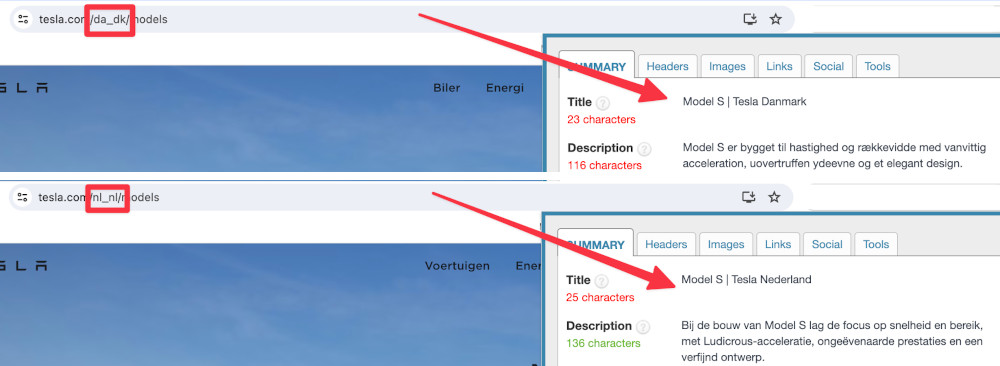
Content on each localized version of the Tesla website is adapted for its respective audience, including vehicle availability, purchase terms, etc.

International Link Building Strategy
Tesla actively employs an international linkbuilding strategy, gaining backlinks from relevant and authoritative websites in different countries and regions. This strategy includes press releases about international events and Tesla-related activities.
Geographical Tags and Metadata
Metadata on each page of the Tesla website is optimized for its local audience, including geographical keywords, regional schema markup , and local contact information.
These practices help Tesla attract more potential customers from different countries and language groups by optimizing its website for an international audience.
Driving Global Success
International Search Engine Optimization (SEO) encompasses a multifaceted approach aimed at reaching global audiences effectively. By conducting thorough research to identify target regions and languages, adapting keyword strategies for international search queries, creating localized content, updating website structure and navigation, and implementing Hreflang tags, businesses can enhance their online visibility and engagement across borders.
Looking to dominate Google search worldwide? Get in touch with our SEO experts and let's elevate your business to the top of international search results together!
International SEO FAQs
How do you know if your business is ready to invest in international SEO?
You are usually ready when you already see consistent demand from other countries in your analytics or customer inquiries, not just a hunch that “going global” sounds nice. Check where existing visitors come from, which languages they use, and whether your operations can support shipping, support, and billing in those markets. If interest is there but conversions are weak, that is often a sign that people cannot yet find or understand a localized experience. International SEO then becomes a way to unlock demand that is already trying to reach you.
What is the difference between translating a site and localizing it for SEO?
Translation focuses on turning words from one language into another, while localization adjusts the message so it actually fits local habits, references, and expectations. From an SEO angle, localization means using the phrases people really search for, choosing examples that make sense in that market, and aligning calls to action with local buying behavior. A literally translated page can still miss important queries or feel off to users. Localized content, by contrast, tends to perform better in search and convert more visitors because it feels like it was created for them, not imported.
How should you prioritize which countries or languages to expand into first?
Start by combining business data with search data, for example sales by country, shipping feasibility, and which regions already visit your site in another language. Then look at search potential and competition level for your main topics in those markets, so you do not choose purely on volume alone. Often it makes sense to begin with one or two “pilot” markets that are both promising and operationally realistic, then refine your playbook before scaling further. This reduces risk and gives you real world feedback instead of relying only on keyword tools.
What role does hosting and site speed play in international SEO performance?
If your site is technically slow for users far from your main server, they may bounce before interacting, which sends poor engagement signals and hurts conversions. Using a content delivery network, optimizing images, and minimizing heavy scripts become even more important when you serve several regions. It is also wise to test performance from different countries, not just from your home location, because experiences can differ dramatically. A fast, stable site makes all your other international SEO work more effective.
How can you adapt your analytics setup for multiple languages and regions?
You will get clearer insights if you segment traffic by country, language, and localized URL structures rather than looking only at global totals. Custom reports or filters that group each market’s key pages together help you compare how people behave in each region. Tracking goals such as leads or sales separately for every locale shows where localization is working and where people drop off. Over time, these segmented views guide which markets deserve more content, budget, or technical improvements.
What are common mistakes businesses make when adding language selectors?
One frequent mistake is hiding the selector in small text or flags that are hard to recognize, which makes it difficult for users to find the right version. Another is forcing automatic redirects based only on IP, so travelers or bilingual users keep being sent to a version they do not want. Some sites change the visible language without changing the URL, which confuses both users and search engines. A clear, persistent language switch that changes to a dedicated URL for each locale tends to work best.
How does link building change when you move from local to international SEO?
For global visibility you still want high quality links, but now you need them from a broader mix of countries and languages that match each market. Local media, industry sites, and partners in your target regions become important sources, not just global domains. It can also help to support market specific campaigns, such as sponsoring local events or collaborating with regional creators, since those efforts naturally generate locally relevant mentions. The aim is for each localized section of your site to build its own authority, not to rely only on links to your original market.
How can you keep brand voice consistent across multiple languages while still adapting to local cultures?
A good approach is to define core brand principles and tone in one place, then give local teams or translators guidelines on how to express them in their language. This might include preferred vocabulary, what level of formality to use, and which topics or jokes to avoid. Regular reviews of localized content help make sure each market feels authentic without drifting away from the overall brand identity. When teams collaborate instead of working in isolation, customers recognize the brand even though the wording changes.
What should you watch for when maintaining international SEO over time, not just during launch?
Search behavior, regulations, and competitors evolve in each country, so your initial keyword and content assumptions can become outdated. Periodic reviews of rankings, search queries, and user feedback in every key market help you spot new topics to cover or pages that are slipping. You may also need to adjust content for changes in pricing, legal requirements, or how your product is positioned locally. Treating international SEO as an ongoing program rather than a one time rollout keeps you aligned with real world changes.
How can smaller companies compete internationally against large global brands in search?
Smaller businesses rarely win by trying to outspend big brands on broad, generic terms, especially in multiple languages at once. Instead, they can focus on more specific queries, niche topics, and detailed resources that large players overlook but international buyers still care about. Building genuinely useful guides, comparison pages, or support content for a narrow audience can earn strong engagement and links even without a huge budget. Combined with thoughtful localization, this focused approach lets smaller companies carve out space in competitive global markets.