Google Search Generative Experience (SGE): A New Era in Search Technology
- Home
- Knowledge Sharing
- Google Search Generative Experience (SGE): A New Era in Search Technology
What is Google Search Generative Experience?
Google SGE (Generative Search Experience) is a system where artificial intelligence provides short answers to users' queries on Google. Generative search creates content based on existing samples. If it becomes popular and accessible, online search, as we've known it for decades, will change forever. Users will have access to a new integrated search results page with detailed answers to their search queries.
What is the Difference between Conventional Search and SGE?
Traditional internet searches involve manual processes. Users enter a question or keyword, and the search engine crawls websites to provide answers according to its algorithms. Factors such as website authority, audience size, page type, and other factors influence the usability of any website, with top-quality websites appearing near the top of the results page. The traditional system does not create content but finds it on several sites, after which the user must independently follow the link.
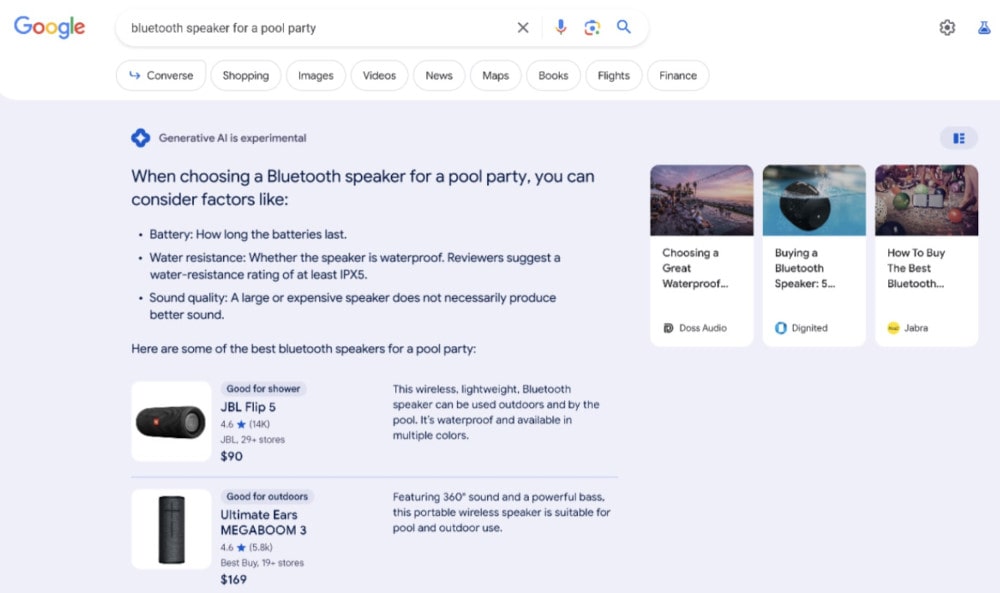
In contrast, generative search doesn't just generate links: AI analyzes all search results, generates content, and displays it in the browser. According to Google representatives, this technology will allow humanity to search for a whole new set of questions that traditional Google searches would never be able to answer.
Importance and Impact on Search Technology
Several benefits can be highlighted even without interacting with the new technology, based solely on information from Google:
Rapid learning of new or complex topics: Providing step-by-step solutions, comparisons, and specific action plans for the users.
Personalization of search results: The system will generate personalized results based on user preferences and actions, adapting content to their needs.
Promptness in answering specific questions: SGE will ensure swift retrieval of relevant information, positively impacting the user experience.
Facilitating the search, selection and purchase of goods: providing users with a separate store section for purchasing.
Accessible to a broader audience: using an automatic translator.
These advantages are particularly beneficial for users, as they will find it more convenient to interact with the search engine and receive answers to their queries.
Video from Google's official YouTube channel
How SGE Might Affect SEO
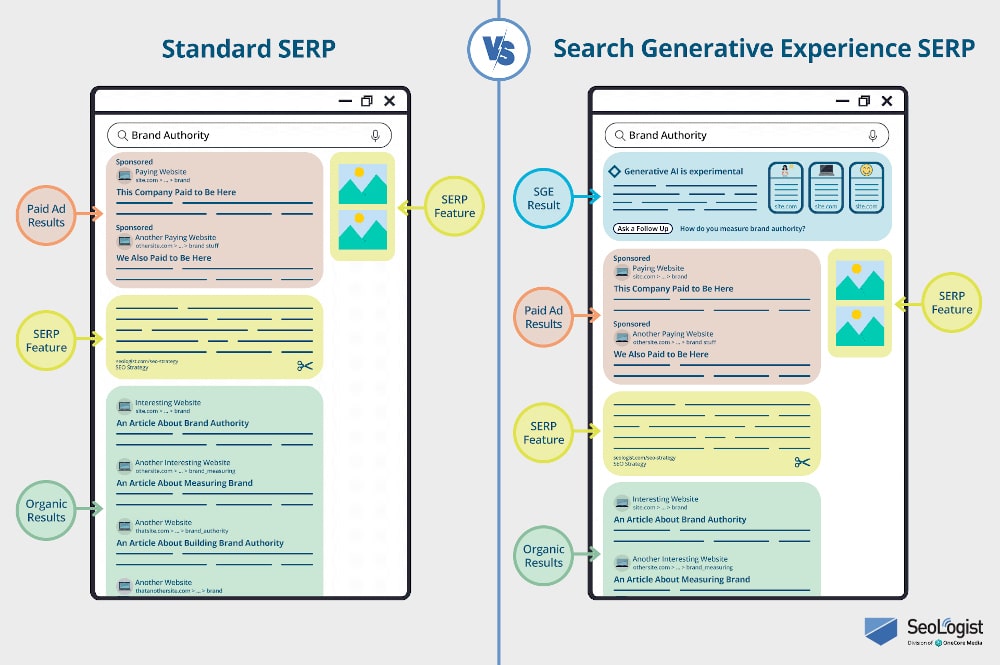
Websites could experience a decline in visibility and organic traffic, as SGE will occupy the top of the search results ahead of traditional organic listings. This could lead to a decrease in website traffic. However, according to a HubSpot report , 75% of web analysts believe that generative search will positively impact websites. Additionally, 68% predict that their blogs will receive more traffic than before.
Some websites will be included in AI-generated responses, which could significantly increase the number of visits and target actions on those sites.
Preparing for these changes is essential, as AI is rapidly evolving, and companies are actively seeking ways to integrate this tool.
How to Adapt to the Changes
We recommend that you maximize the effectiveness of your website to make it more likely to be integrated into AI-powered content and get higher search results. Here are a few points to focus on:
Creating Targeted Content: High-quality, relevant, and useful content is still required. The ultimate goal of AI is personalized analytics for each user, taking into account location, browsing history, device, and more. Google prefers first-person content that builds trust.
Focusing on Long-Tail Queries: Your site's content should go beyond superficial and general information. You must address longer and more specific queries to remain a relevant resource.
Adhering to E.E.A.T Factors (Experience, Expertise, Authoritativeness, Trustworthiness): As Google's generative AI redefines search, websites must also become more reliable, offering valuable and helpful user content that addresses customer issues.
Measurement Framework: Once the SGE is fully integrated, the reporting framework will likely change and become more complex. There may be a shift to focusing on conversion as the primary metric, with less emphasis on traffic and ranking.
You can learn more about the capabilities of SGE by watching the Google conference.
SGE — The Future of Google
We must understand that changes are coming, and SGE will affect everyone. Today, artificial intelligence cannot be ignored, and Google will continue to integrate it into its strategy.
It is crucial to prepare and stay updated with the changes gradually. Quality and targeted content remain a priority.
Keeping track of the changes introduced by the search engine is crucial. This is necessary to respond promptly to innovations and adjust your website promotion strategy accordingly. For effective website promotion in search engines, we recommend
consulting our SEO experts
, who are up-to-date with all the updates and can help elevate your website to the top of the search results.
Google Search Generative Experience (SGE) FAQs
How is Google SGE changing the search results page in 2025?
In many markets, the SGE experience has evolved into AI Overviews that sit above or alongside traditional organic results, summarizing answers and then citing a small set of web pages. Google describes this as using a custom Gemini model to organize information, plan tasks, and surface follow up questions directly inside Search. This means users often engage with an AI summary first, then decide whether to click through. Site owners should expect more blended layouts where classic blue links share space with interactive AI panels instead of always leading the page.
Which types of queries are most likely to trigger SGE or AI Overviews?
Current research shows that AI Overviews appear most often for informational and problem solving queries, such as how to, comparison, or explainer style searches, rather than pure navigational requests. Studies tracking coverage by industry find especially high usage in topics like healthcare, relationships, and general how to advice, with lower coverage for some transactional ecommerce searches where Google wants to protect shopping clarity. Long, conversational questions and multi part prompts are more likely to surface generative answers than very short queries. As users get used to asking more detailed questions, that bias toward rich informational intent will probably grow.
How is SGE affecting user click behavior and the rise of zero click searches?
Generative answers often satisfy simple questions directly on the results page, which can reduce the need to click through for basic facts. A recent analysis of consumer behavior found that zero click experiences, including AI based summaries, now influence a noticeable share of searches and can reduce organic traffic in the range of tens of percent for some sites. At the same time, users still click when they need depth, tools, or trustworthy primary sources. This creates a sharper divide between shallow queries that end on the SERP and deeper journeys where high quality sites can still win.
How can you tell if your content is being used or cited in SGE results?
Right now there is no single report that lists all AI citations, so you need a mix of manual checks and analytics. You can test priority queries in clean browsers or different devices and watch for your domain in the source links under AI Overviews, as well as any inline links in the summary itself. In parallel, track landing pages for patterns such as new impressions on long tail queries and traffic spikes that coincide with AI rollout phases. Google’s guide to AI features in Search encourages site owners to monitor how their pages appear in these new experiences while still focusing on overall Search performance.
What content characteristics make it more likely to be featured in AI summaries?
Google repeatedly stresses that unique, people first content that thoroughly answers a need is more likely to perform well in AI powered search. Guidance on succeeding in AI search highlights depth, originality, clear structure, and strong evidence of experience and expertise as important ingredients, especially for complex or high stakes topics. Content that is easy to scan, uses clear headings, and directly answers common follow up questions tends to map well to how SGE assembles its summaries. Adding solid sourcing and up to date examples further increases the chance of being treated as a trustworthy reference.
How should keyword and topic research change in an SGE driven environment?
Instead of focusing only on short head terms, it becomes more important to understand the full cluster of questions people ask around a theme, including comparisons, steps, and scenario based queries. User research shows that people increasingly treat generative search like a conversation, refining their prompt over several turns rather than stopping after a single search. That means pages that explore a topic from multiple angles, and internal linking that connects those angles, are better aligned with generative results. It is helpful to map out the related questions SGE tends to show under an AI answer and ensure you have content that genuinely addresses them.
What risks or limitations does SGE introduce for accuracy and trust, and how can sites respond?
Like any generative system, SGE can sometimes misinterpret facts or present outdated information, especially on fast moving topics. Journalistic testing has highlighted examples where AI Overviews confidently state the wrong year or give questionable advice, which can undermine user trust if the behavior is repeated. Site owners cannot directly control those outputs, but they can publish clear, well sourced information that is easy to verify and correct. Maintaining up to date content and transparent citations makes it more likely that, when your pages are used, they strengthen trust rather than contribute to confusion.
How is SGE handling sensitive YMYL topics such as finance, health, and legal issues?
Google has historically treated Your Money or Your Life queries with extra caution, and that pattern continues in AI powered search, where clear sourcing and strong expertise signals matter even more. Research tracking AI Overview coverage by niche shows that sensitive YMYL areas still trigger summaries, but with lower or more carefully curated exposure compared to everyday advice topics. For sites in these spaces, aligning with E E A T principles, disclosing credentials, and citing reputable primary sources is crucial. This helps generative systems identify your pages as safe material to surface, or at least to reference in support of their answers.
What does SGE mean for ecommerce and product discovery?
Early data suggests that AI summaries are more cautious around direct purchase recommendations, yet they still play a role in pre purchase research, such as feature comparisons or ideas lists. One study of shopping related queries found that different AI systems, including Google AI experiences, often recommend different brands, which can confuse users trying to make a decision. For merchants, this makes it important to provide clear product details, rich imagery, and structured data so both traditional listings and generative panels can present offers accurately. Category and buying guide content that answers nuanced questions can also attract visibility at earlier stages of the journey that SGE influences most.
What practical steps should brands take in 2025 to adapt their SEO to SGE?
First, audit your key topics to see where AI Overviews appear and whether your pages are already among the cited sources, then prioritize gaps where helpful content is missing. Next, refine core assets so they deliver unique value, incorporate expert insight, and are technically easy for Google to parse, including good markup and mobile performance. As AI experiences expand, Google’s own messaging is that sites which focus on satisfying real user needs with distinct, trustworthy content will be better positioned than those that chase short term tricks. Finally, update your reporting to look beyond raw clicks, adding metrics such as assisted conversions, branded demand, and engagement from the queries where SGE is most active.