What Is SEO & How It Works (Complete Guide)
- Home
- Knowledge Sharing
- What Is SEO & How It Works (Complete Guide)
Table of contents
- What is SEO?
- How search engines work (crawl → index → serve)
- The four pillars of SEO (what actually moves the needle)
- SEO vs SEM/PPC (when to use what)
- A step-by-step SEO process designed for lead gen
- What monthly SEO services typically include (Canada + US)
- What to measure (CMO-friendly KPIs)
- Common mistakes that waste budget
- FAQs
What is SEO?
SEO (Search Engine Optimization) is the practice of improving your site so search engines can understand it and so users can find it and decide whether to visit — through organic (non-paid) search results.
A simple way to think about it:
- Search engines want to deliver the best match for a query.
- Your job in SEO is to make it easy for them to (a) access your pages, (b) understand what each page is about, and (c) feel confident that your page is a strong result for that query. That’s why top guides repeatedly frame SEO as a blend of technical accessibility, content usefulness, and credibility signals.
What SEO is not
- It’s not a one-time “setup.” Search engines and competitors change constantly, so SEO is usually an ongoing operating discipline, not a checkbox. (This is why monthly SEO services exist.)
- It’s not just “adding keywords.” Keywords help you understand demand and intent, but performance comes from the full system: technical, content, internal linking, and credibility.
How search engines work (crawl → index → serve)
Most executives hear “Google ranks pages” and stop there. But SEO becomes much easier to manage when you treat it like a pipeline with three stages:
Stage A — Crawling (discovery)
Google uses automated programs (“crawlers”) to explore the web and find pages to add to its index. In many cases, you don’t submit every page manually — Google discovers pages through crawling and links.
What this means for you
- If important pages aren’t being discovered, you’ll see slow indexing or missing pages in search.
- Internal linking and a clean crawl path matter because crawlers follow links to find content.
Stage B — Indexing (storage/understanding)
After Google analyzes a page, it may store it in an index of possible results (if eligible).
What this means for you
- SEO can’t succeed if your best pages aren’t indexable, or if duplicates/canonicals/technical issues confuse what should be indexed.
Stage C — Serving & ranking (selection)
When someone searches, Google’s systems select from the index what appears most relevant to that query and context.
What this means for you
- Ranking is query-specific . A page can perform brilliantly for one intent and poorly for another.
Time-to-impact reality (important for monthly SEO planning)
Google’s documentation is explicit: some changes may show effects in hours, others can take several months, and it’s generally sensible to wait a few weeks before assessing impact. [1]
So the professional approach is not “did we rank yet?” but:
- Did we remove crawl/index blockers?
- Did we improve relevance and usefulness for target intents?
- Did we strengthen internal linking and credibility signals?
- Did we validate the Search Console and conversion outcomes?
The four pillars of SEO that drive qualified leads
Many guides converge on a consistent framework: keyword research, on-page SEO, off-page SEO, and technical SEO.
Here’s what that looks like when your business goal is monthly lead acquisition, not vanity traffic.
| Pillar | What it’s for | Typical work | What “good” outputs look like |
|---|---|---|---|
| Keyword research | Find demand + intent | Segment keywords by intent (problem-aware → solution-aware → vendor-aware) | A mapped plan of pages to build/improve |
| On-page SEO | Relevance + clarity | Titles, headings, internal links, content structure | Pages that clearly answer the query and guide next steps |
| Technical SEO | Crawl/index/UX foundations | Sitemaps, robots rules, site architecture, performance hygiene | Search engines can reliably access and understand key pages |
| Off-page SEO | Credibility signals | Digital PR, link earning, brand mentions | Stronger trust footprint over time |
This “pillars” approach aligns with what top guides teach, even if they label the categories slightly differently.
A quick note on snippets (titles/meta descriptions)
Google describes snippets as automatically generated from page content, and they can vary based on the user’s query. Google may also use the meta description when it more accurately reflects the page.
Practical implication: write meta descriptions for humans (clarity + persuasion), but don’t manage SEO like you can “force” snippets.
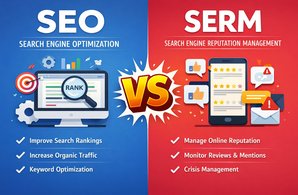
SEO vs SEM/PPC (and how to use them together)
Many top guides explicitly separate:
- SEO = organic (unpaid) search visibility
- PPC = paid search placements
- SEM = umbrella that often includes both SEO and PPC
When SEO is the better bet
- You want compound visibility across categories, services, and the problems people search for each month.
- You need trust-building content that supports sales cycles (especially B2B, higher ticket services).
When PPC is the better bet
- You need demand capture immediately for bottom-of-funnel terms.
- You’re validating which offers/angles convert before investing in content production.
The best-case play (CMO lens)
Use PPC to pressure-test:
- highest-converting queries,
- messaging that drives qualified leads,
- landing page structure that improves conversion rate.
Then use SEO to build durable coverage around the same intent clusters.
A step-by-step SEO process designed for lead generation
This is the part most “What is SEO?” guides don’t operationalize enough.
Step 1 — Build an intent map (not a keyword list)
Instead of 200 keywords, you want 10–30 intent themes tied to real business outcomes.
Example for a B2B service:
- “how to solve X problem” (problem-aware)
- “best way to do X” (solution-aware)
- “X agency” / “X services” (vendor-aware)
Then assign:
- one primary page per intent theme,
- supporting pages for subtopics,
- internal links that move people toward conversion.
This is how keyword research becomes a pipeline strategy, not a spreadsheet.
Step 2 — Make sure Google can crawl and index what matters
Google’s SEO Starter Guide is blunt: follow the technical requirements so nothing prevents your site from appearing in search results.
Your practical checklist:
- Ensure key pages aren’t blocked by robots rules unintentionally
- Keep an XML sitemap
- Use internal links so important pages aren’t “orphaned”
(Exact implementations vary by CMS, but the principle is stable.)
Step 3 — Build pages that satisfy the query and convert
A lead-focused SEO page needs two jobs:
- satisfy the search intent,
- move the user to a meaningful next step.
A strong template:
- Clear promise in the intro (confirm the user is in the right place)
- Scannable sections that answer the key questions
- Proof elements (process, examples, FAQs, constraints)
- A soft CTA that matches intent (audit, consultation, pricing conversation, demo)
Step 4 — Strengthen “understanding” signals (structure)
You’re making comprehension easy:
- descriptive headings
- internal links to supporting explanations
- clear page purpose
Step 5 — Earn credibility signals over time
Off-page SEO is commonly framed as actions outside your site — often links — intended to strengthen reputation and trust.
The safest framing for executives:
- You’re not “buying links.”
- You’re building a brand footprint where reputable sites naturally reference your resources, tools, studies, or POV.
Step 6 — Measure, iterate, and keep what works
Google explicitly encourages iteration if you’re not satisfied after giving changes time to be reflected.
That’s basically the justification for monthly SEO: prioritize → ship improvements → validate → repeat.
What monthly SEO services typically include (Canada + US)
A good monthly SEO retainer isn’t “a bag of tasks.” It’s governance, prioritization, production, and measurement.
A realistic monthly cadence (high-level)
Every month, you should be doing some mix of:
- Technical monitoring & fixes (indexing anomalies, template issues, site changes)
- Content work tied to intent (build / improve high-value pages)
- Internal linking & information architecture (so authority flows to money pages)
- Credibility work (digital PR, link earning, partnerships, citations where relevant)
- Reporting tied to pipeline (what moved, what didn’t, what’s next)
This aligns with the standard pillar framework described across leading SEO guides.
Canada + US: practical considerations that matter in real execution
If you target both Canada and the US
International targeting is a common pain point. Google provides guidance on managing multi-regional and multilingual versions and using hreflang/localized setups where appropriate.
Practical exec takeaway: you want the right page served to the right audience without splitting authority across duplicates.
If your funnel includes email nurture from SEO leads
Even though this is “SEO,” lead handling often touches compliance:
- CASL (Canada): government guidance emphasizes consent to send commercial electronic messages and requirements like identification and an unsubscribe mechanism.
- CAN-SPAM (US): FTC guidance highlights requirements like accurate header information, non-deceptive subject lines, and including a physical postal address (and other rules in the guide).
This isn’t to turn SEO into legal advice — it’s to prevent the classic mistake where SEO generates leads and the nurture system creates risk.
Privacy expectations (Canada)
The Office of the Privacy Commissioner of Canada summarizes that PIPEDA applies to private-sector organizations across Canada collecting/using/disclosing personal information in commercial activity.
Practical takeaway: if SEO leads are entering forms/analytics/CRMs, your privacy posture and disclosures should be clean.
What to measure (CMO-friendly KPIs that don’t lie)
Rankings are useful diagnostics. CMOs need business signals.
The KPI stack (from leading indicators → lagging indicators)
Leading indicators (weekly/monthly)
- Indexation coverage trends for key templates/pages (are we getting content into the system?)
- Share of visibility across priority intent clusters (directional)
Mid indicators
- Organic sessions to non-blog commercial pages
- CTR changes on priority pages (often influenced by titles/snippets, but remember snippets are automated) [10]
Lagging indicators (most important)
- Qualified form submissions / demo requests from organic
- Sales-accepted leads influenced by organic landing pages (requires tracking discipline)
The reporting question that keeps SEO honest
Every month, your SEO report should answer:
- What did we ship?
- What changed (visibility, conversions, pipeline)?
- What did we learn?
- What are the next priorities and why?
Common mistakes that waste SEO budget
- Publishing content without an intent map (you get traffic that doesn’t convert).
- Ignoring crawl/index fundamentals (you’re “optimizing” pages search engines can’t reliably process).
- Treating meta descriptions as a guaranteed snippet (Google may use page content; snippets vary by query).
- Measuring only rankings (and losing sight of qualified lead volume and sales alignment).
- Random acts of SEO (no prioritization model, no iteration cycle — results become inconsistent).
- Over-focusing on “tips” instead of building a system (SEO is an operating cadence, not a hack).
FAQs
What’s the simplest definition of SEO?
SEO is about helping search engines understand your content and helping users find your site and decide whether to visit from search results.
How does SEO work in one sentence?
It works by aligning your site with how search engines discover, store, and present content for specific queries (crawl → index → serve).
What’s the difference between SEO and SEM/PPC?
SEO focuses on organic visibility; PPC focuses on paid placements; SEM commonly refers to the umbrella that includes both.