Why Startups Should Consider SEO as an Investment
- Home
- Knowledge Sharing
- Why Startups Should Consider SEO as an Investment
Search engine optimization, otherwise known as SEO is considered by a few young marketing experts as the old-school to market and should be going the way of the White Pages soon enough.
When we first heard this, we were a little shocked by the comment, and it stems from the fact that the industry has changed over the years, and that an SEO expert from five years ago would be lost and frankly obsolete with today's marketing approaches.
Well in this article we look to dive into why startups should consider SEO as an investment in their future, and their brand.
We have brought together seven reasons why you should look to invest in SEO, and a common thread that winds them all along is that SEO, when done correctly, will help your business grow and reach new potential clients organically better than most, if not all, marketing campaigns.
1. SEO is the bread and butter of internet marketing
Although someone hates to admit, SEO is, in fact, one of the main tools of internet marketing that has been proven to work time and time again. This could be because larger search engines have developed to encourage companies and sites to adhere to their optimization standards, or that developers have been able to work in SEO into multiple mediums of media.
Think about it, no matter what medium, text, audio or visual, the content itself still relies on simple keywords .
Thus, if you are a company looking to grow organically, SEO is a great tool to start to build your brand and audience over time.
2. It works… and that in itself is reason enough
No matter if you have just returned from a U of T with a Masters in Business Administration with a focus in marketing, or a local startup web developer, SEO is seen as a universal marketing tool to get you and your brand on the market. This is the kind of business equalization that many startups are looking to take advantage of and SEO is a great tool to make this happen.
Always remember, SEO techniques when correctly delivered can move a startup from the back pages of Google to the front page of the site. Plus, according to MarketDive, professional marketers see SEO as a more useful tool 82% of the time when compared to other like market tools of the trade.
Trust the experts, and enjoy your business organically growing with SEO, and it is all because it just works.
3. Search engines are the new king
Although your grandparents might disagree, the internet has changed the face of commerce and business for the rest of time. Never before has the consumer had this much power at the till, and with comparison and competitors a click away, the online realm is one where the search engine is king.
Consider this, according to Internet Live Stats, Google, the largest of the search engines, receives 63,000 searches per second .
That is unheard of, and when you think that with proper SEO your startup can reach the first page of these searches, you can quickly see why this marketing method is one of the keys to marketing professionals to get their brands to potential clients.
4. SEO is quite cost-effective when compared to other marketing options
As a startup, costs are always going to be a concern.
However, when you look at other marketing methods such as social media marketing, lead marketing or pay per click advertising, SEO is a steal and a half.
According to Jayson DeMers, a Forbes contributor, SEO is not a quick investment, but rather a long-term investment that will help your startup reach your long-term goals. Jayson touches on some excellent points in his article , but the most critical aspect is that SEO is a cost-effective long-term marketing solution that is perfect for a company that is looking for sustainable and planned growth. Plus, SEO will not break the bank, with most companies coming in under a standard marketing budget of a small to medium startup.
Consider it a cost-effective long-term investment, and SEO will ensure you organically grow your brand.
5. SEO, a mobile and web-based solution
I am not sure if you have noticed, but everyone and their dog has a smartphone these days. Yes, there are a few unicorns like comedian Ari Shaffir who refuses to carry anything but his trusty flip phone, but the world has indeed gone mobile. Although this presents a challenge for some marketing niches, for SEO, it is just another day with the Google crawler.
A top-end SEO expert can utilise mobile specific and web-specific techniques to grow a strategy that will genuinely rocket your brand to the next level .
Five years ago local search optimisation was a phrase that no one had touched, and yet today, it has doubled in use year over year since it has been introduced, at least according to Search Engine Watch. Startups who take advantage of the mobile revolution and the marketability that comes with SEO have enjoyed the benefits, and thus SEO is a no-brainer investment for any niche.
6. Your competition is doing it…
Look, the startup space is competitive enough without your competition taking advantage of one of the top marketing strategies in the marketplace.
Naturally, SEO is not a secret, and when it comes to the startup space, this is no different. The thing about SEO is that it is always active, and is not just turned off when you shut off the lights. If your company is not employing an SEO strategy, your brand and ranking are hurt every second, and your competitors could be gaining market cap and clients overnight while you are left without funding or a way forward.
SEO is not a band-aid approach to brands or companies, but rather, it is a long-term and necessary investment for those who are looking to ensure their company can grow and get in front of new potential clients.
It works, and your competitors are employing SEO to get in front of new clients,
why are you not?
7. Search Engines are ever changing sites, and not having a content profile is going to hurt you
Google, Bing, Yahoo and even Baidu all have the same mantra, how can we make our site the best search engine on the internet?
This is a tough question to crack, and thus these massive search engines tweak their search algorithms every once and a while, and the SEO industry adapts.
However, if your startup lacks a strong content profile you are not only going to become irrelevant to the search engine, you will be damaging your business. This is because if a site does not adapt to the new algorithm it will be dropped in ranking and trustworthiness by the site, and that is a purgatory that is tough to get out of.
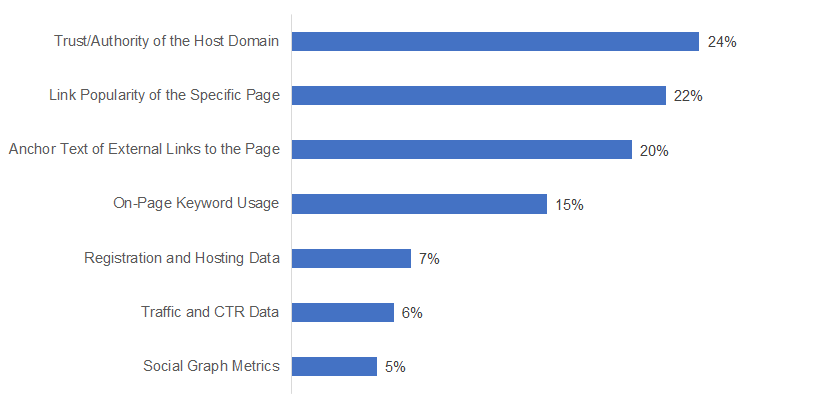
For reference, I have put together a chart to showcase the components of the Google Ranking Algorithm with data from SEOmoz's Biennial Search Ranking Factors . This is only for Google, and each of the other major search engines differs, but you can see how complicated these algorithms can get.
For instance, two years ago link popularity was not even a metric, and today it is worth over 22% of the estimated Google Ranking Algorithm.
The Components of Google Ranking Algorithm
Final Thoughts
So, what does this all mean for a startup?
Well simply put, SEO is a worthwhile investment for any startup, and no matter if you are in the crypto space or a clothing line, SEO will allow you to connect to new and old customers like never before.
It may seem like an old-school methodology when you think of social media marketing or viral marketing, but the truth of the matter is that SEO is not going anywhere, and the faster you start to build your site and content towards SEO, the easier it will be for your brand and company to grow.
You always hear about the speed of today's marketing campaigns and how they are over before some people even think they begin but when it comes to SEO, it is a slow burn. Instead of a band-aid, SEO offers a permeant and often integral marketing opportunity for startups to better their standing with the leading search engines and be seen by potential clients both through the web and mobile. No simple solution is going to work overnight, and any marketing professional will touch on the fact that a blended marketing approach that includes SEO will not only grow your client base but will help edge out competitors in the space. As I said at the beginning, the common thread throughout this piece circles around how SEO will help you grow your brand and client base organically, but the fact of the matter is that SEO works, and startups should look to include it in either their blended marketing campaigns or as a standalone tool.
The ability to utilise SEO is there, so what are you waiting for, now is the time to invest.
Why Startups Should Consider SEO FAQs
What makes SEO an investment for startups instead of just a marketing expense?
SEO builds assets that keep working for your startup long after the initial work is done. When you improve your site structure, create helpful content and earn trust from search engines, you create long term visibility. That visibility continues to attract visitors without paying for every click. Over time, the return on that upfront work usually grows instead of disappearing when a campaign ends.
Is SEO still relevant for modern startups that focus on social media and paid ads?
Yes, SEO is still very relevant, even in a world full of social and paid campaigns. Search is where people go when they are actively looking for answers, products or services, which means they often have stronger buying intent. While social and ads can create awareness, SEO captures people at the moment they are researching solutions. Combining SEO with other channels gives startups a more stable and balanced marketing mix.
How soon can a startup expect to see results from SEO efforts?
Most startups begin to see meaningful changes in organic traffic and rankings within a few months, not a few days. Search engines need time to crawl, understand and trust your website. The pace also depends on how competitive your niche is and how consistently you work on content and optimization. Think of SEO as a gradual curve of growth rather than a quick spike.
Can a small startup with a limited budget realistically compete in search results?
A smaller budget does not automatically mean you cannot compete in search. If you focus on a clear niche, specific problems and well researched keywords, you can outperform larger brands that are less focused. Publishing genuinely helpful content and offering a strong user experience can make search engines see your site as a relevant answer. Being strategic and consistent often matters more than having the biggest budget.
How should startups decide how much to spend on SEO?
A good starting point is to treat SEO like any other core marketing channel and assign it a stable share of your monthly budget. Consider your revenue goals, sales cycle and how important organic search is in your industry. Many startups invest in a mix of foundational work, such as technical fixes and keyword research, and ongoing activities like content creation and link earning. The key is to commit for the long term rather than testing SEO for a few weeks.
What parts of a startup website matter most for SEO in the early stages?
At the beginning, it is crucial to make sure search engines can easily crawl and understand your site. This means clear navigation, fast loading pages and basic technical health. Next, focus on a handful of core pages that explain who you are, what you offer and which problems you solve. If those key pages are structured around real search queries and provide value, you set a solid foundation for growth.
How does SEO support fundraising and investor conversations for startups?
Investors pay attention to signals that show real market demand and traction. Strong organic visibility and growing search traffic demonstrate that people are actively looking for what you offer and that your brand is being discovered without heavy ad spend. When you can show leads, signups or sales coming from search, it strengthens your story about sustainable growth. SEO can therefore become part of your proof that the business model is scalable.
Is SEO only about getting more website visitors for a startup?
Traffic is important, but SEO is really about attracting the right visitors who are likely to become customers. By targeting topics and queries that match your ideal customer profile, you draw in people who actually have the problems you solve. Good SEO also improves on site experience, which helps more visitors convert once they arrive. In other words, it supports both visibility and revenue, not just raw traffic.
How does SEO fit into a startup’s overall marketing strategy?
SEO works best when it is integrated with other activities, not treated as a separate project. Insights from keyword research can shape your messaging, product positioning and even your ad campaigns. Content created for search can be repurposed for email, social and sales enablement. When all channels are aligned around the same topics and audience needs, SEO reinforces every part of your marketing.
What are the risks for a startup that postpones SEO for too long?
Delaying SEO often means giving competitors a head start in building authority and content depth. Search engines reward sites that have a history of helpful information, so catching up later can be harder and more expensive. You may also miss out on learning early from customer search behavior, which can guide product and positioning decisions. Starting sooner lets your startup compound results instead of constantly trying to close the gap.